
Dimpled Football Rebound Board (100 x 40 cm)
Tip: On a smooth surface, or if the board slides back when the ball hits it, put a sandbag behind the board to hold it in place.
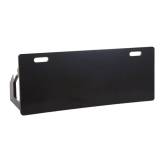
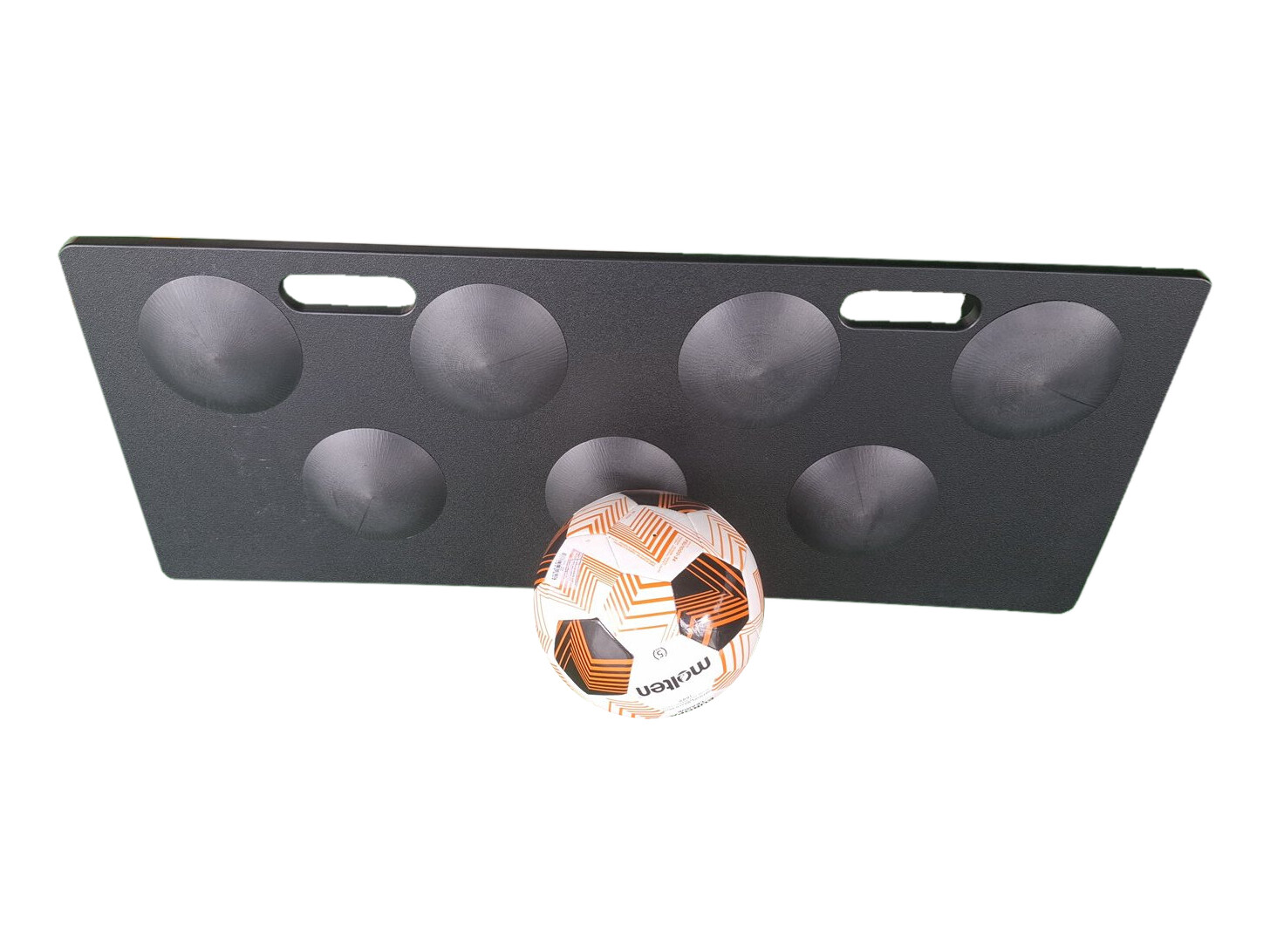
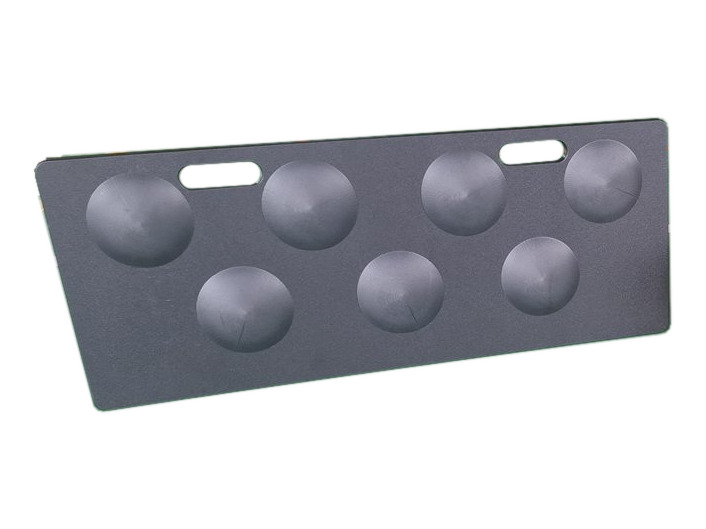
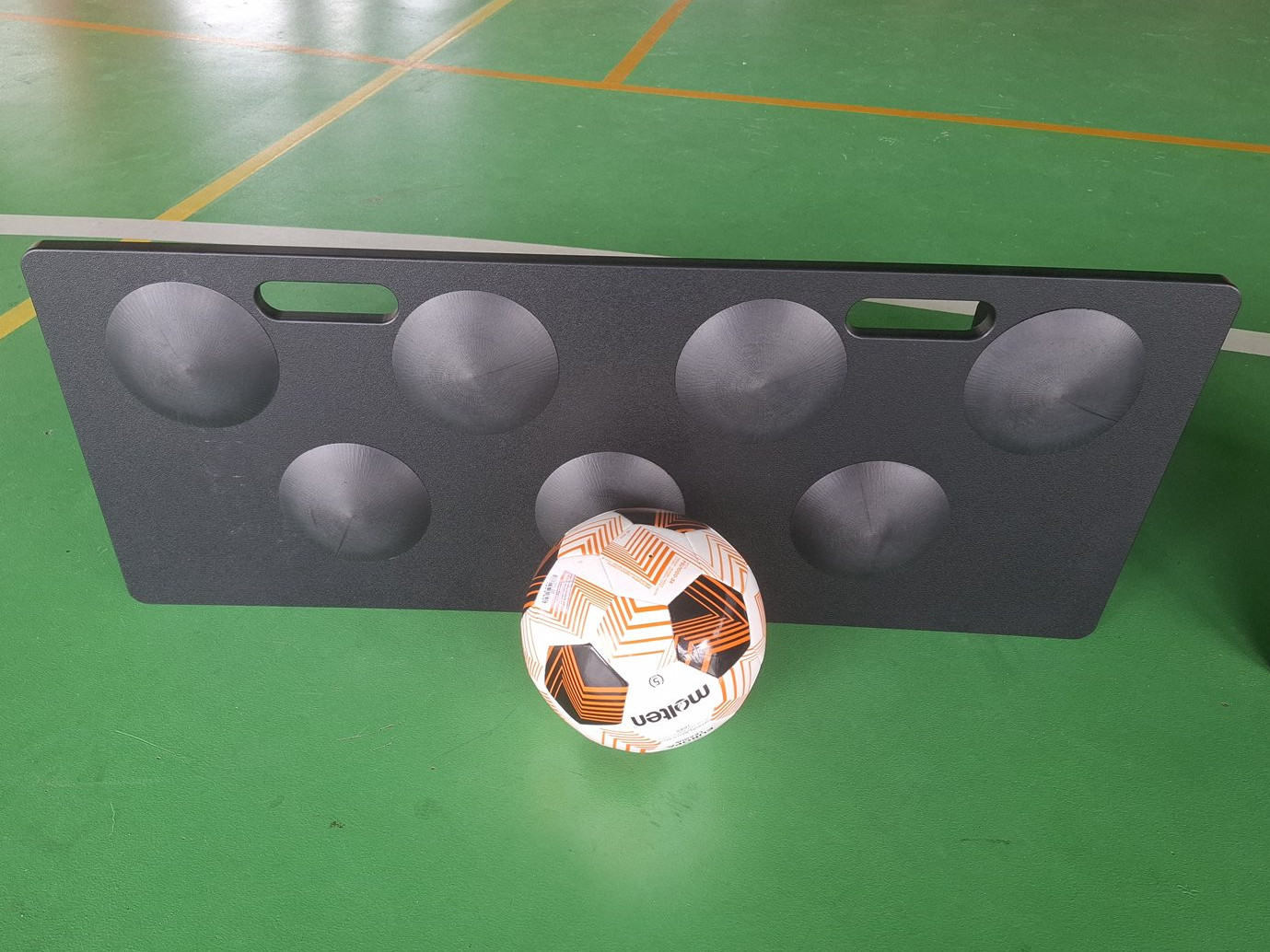
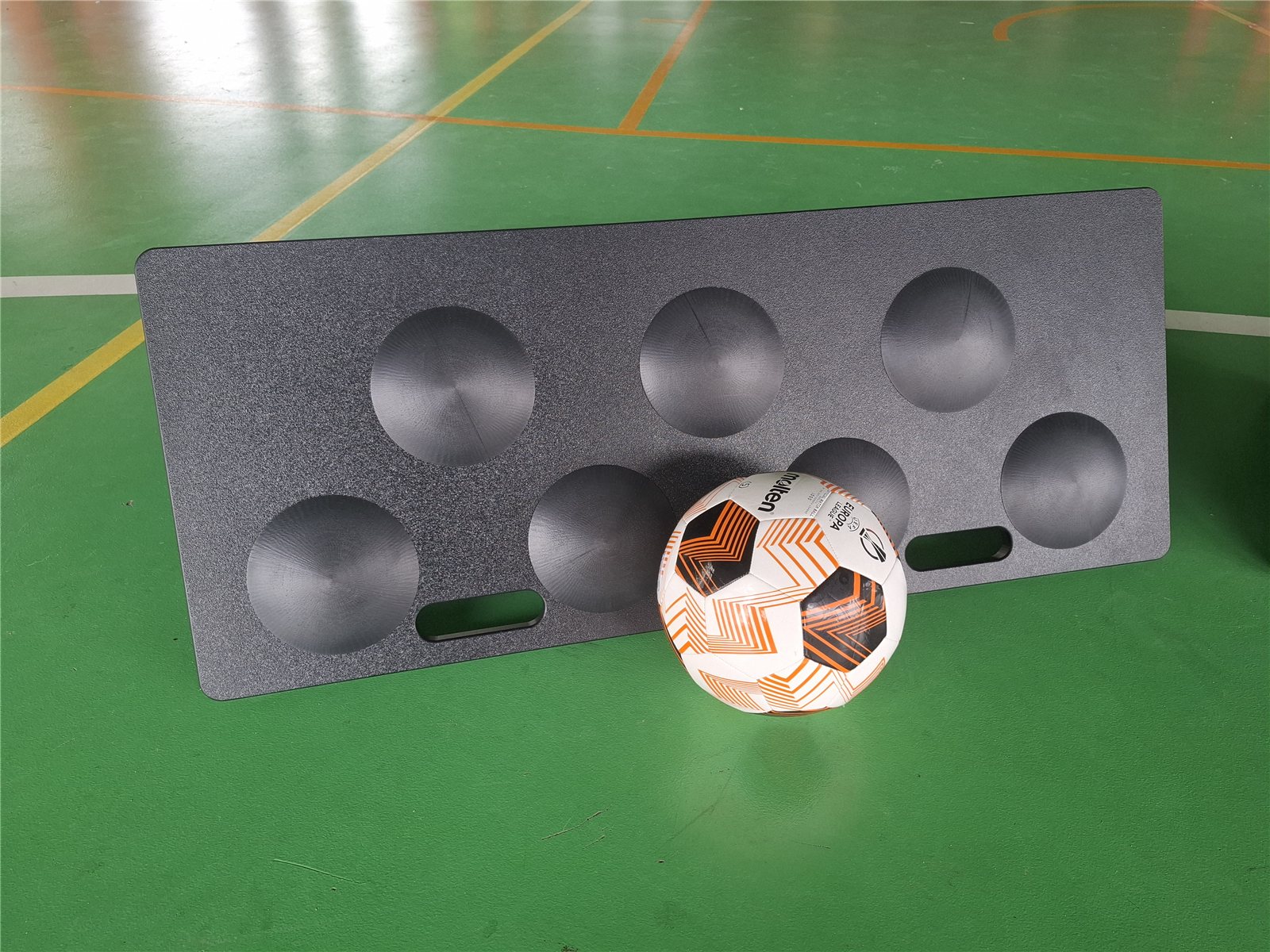
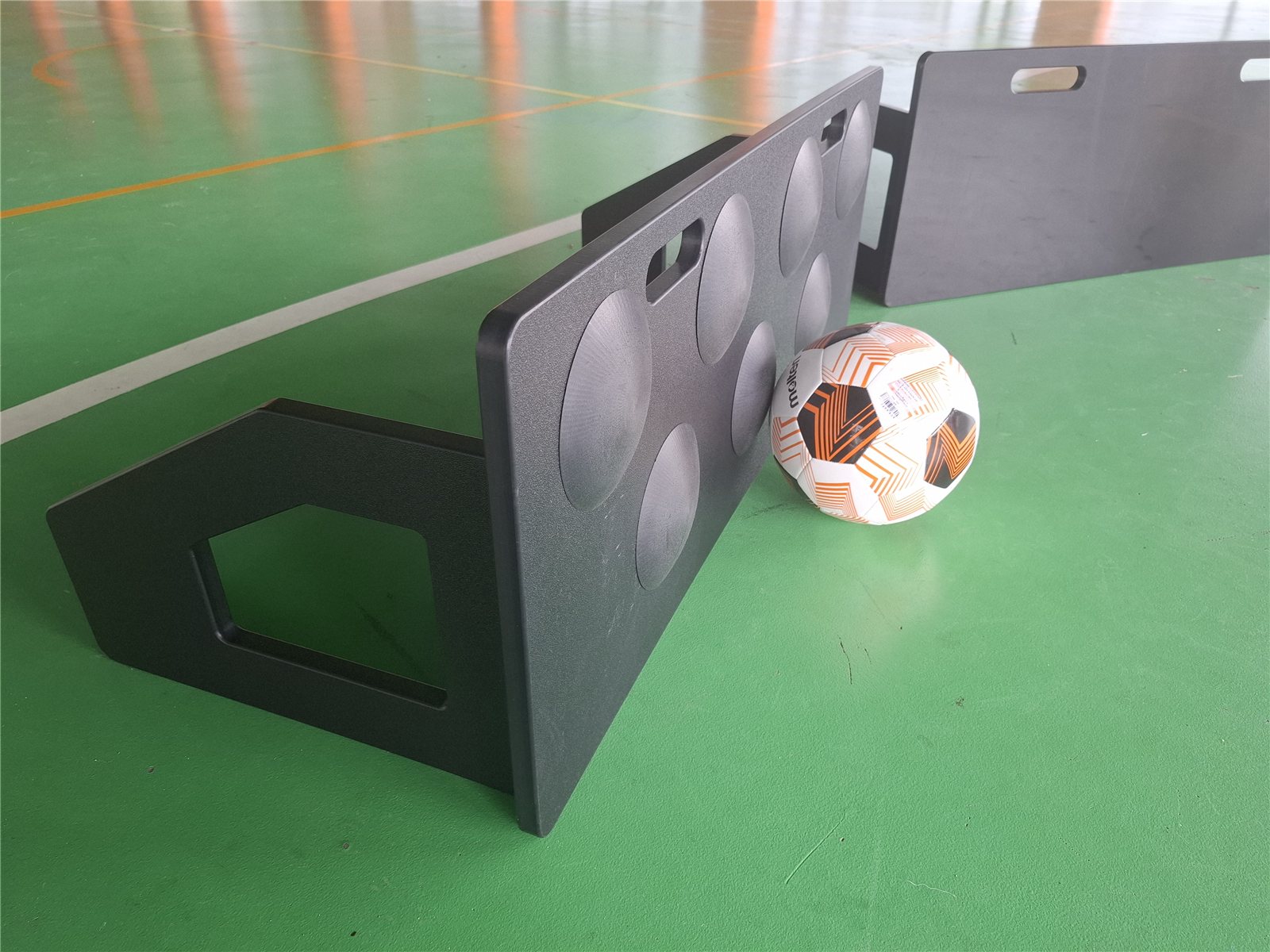
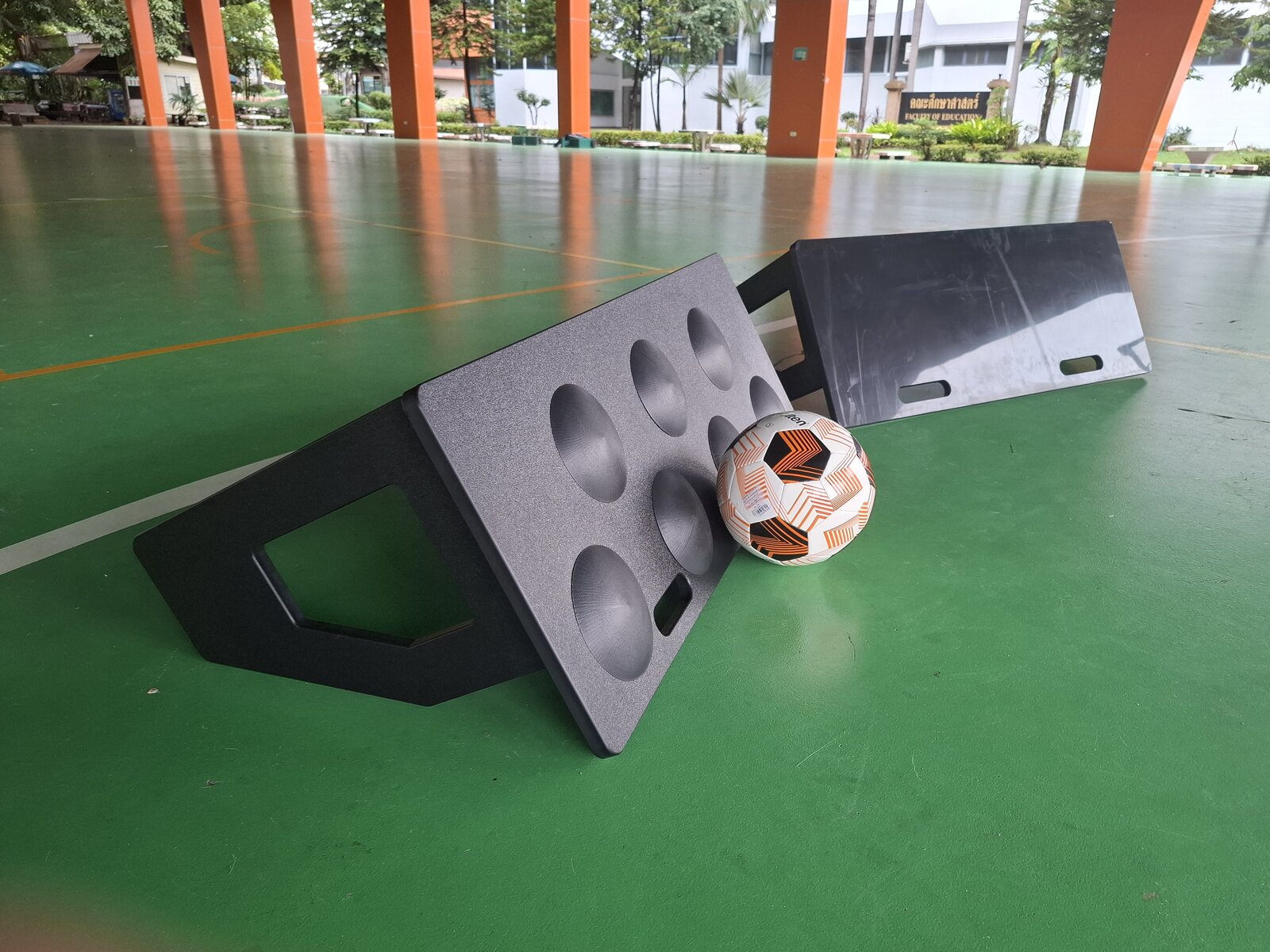
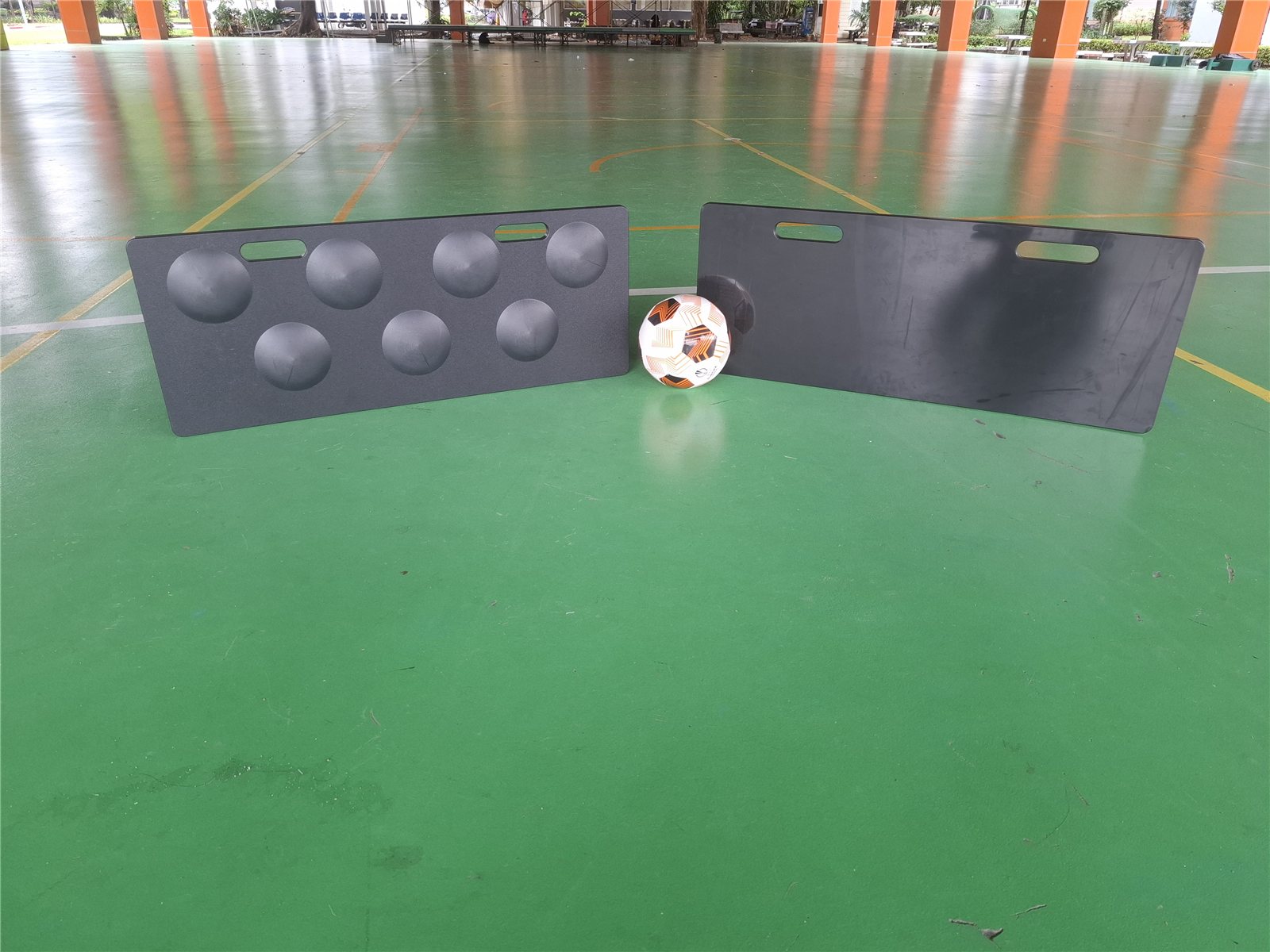
The dimpled rebound board creates additional challenge to your practice drills, by having rows of round domes across its face, so the ball could hit a flat section, or any angle of the domes. It works well in conjunction with the flat face rebound board, mixing predictability and unpredictability. It is 100 x 40 cm, the same size as the flat boards.
- Moulded HDPE. The board and its side frames are rigid plastic. The frames fold, so it stores flat and can be stored as a horizontal stack.
- Two smooth hand slots in the top edge for comfortable carrying. They're solid at 11 kg, so it's easiest over short distances.
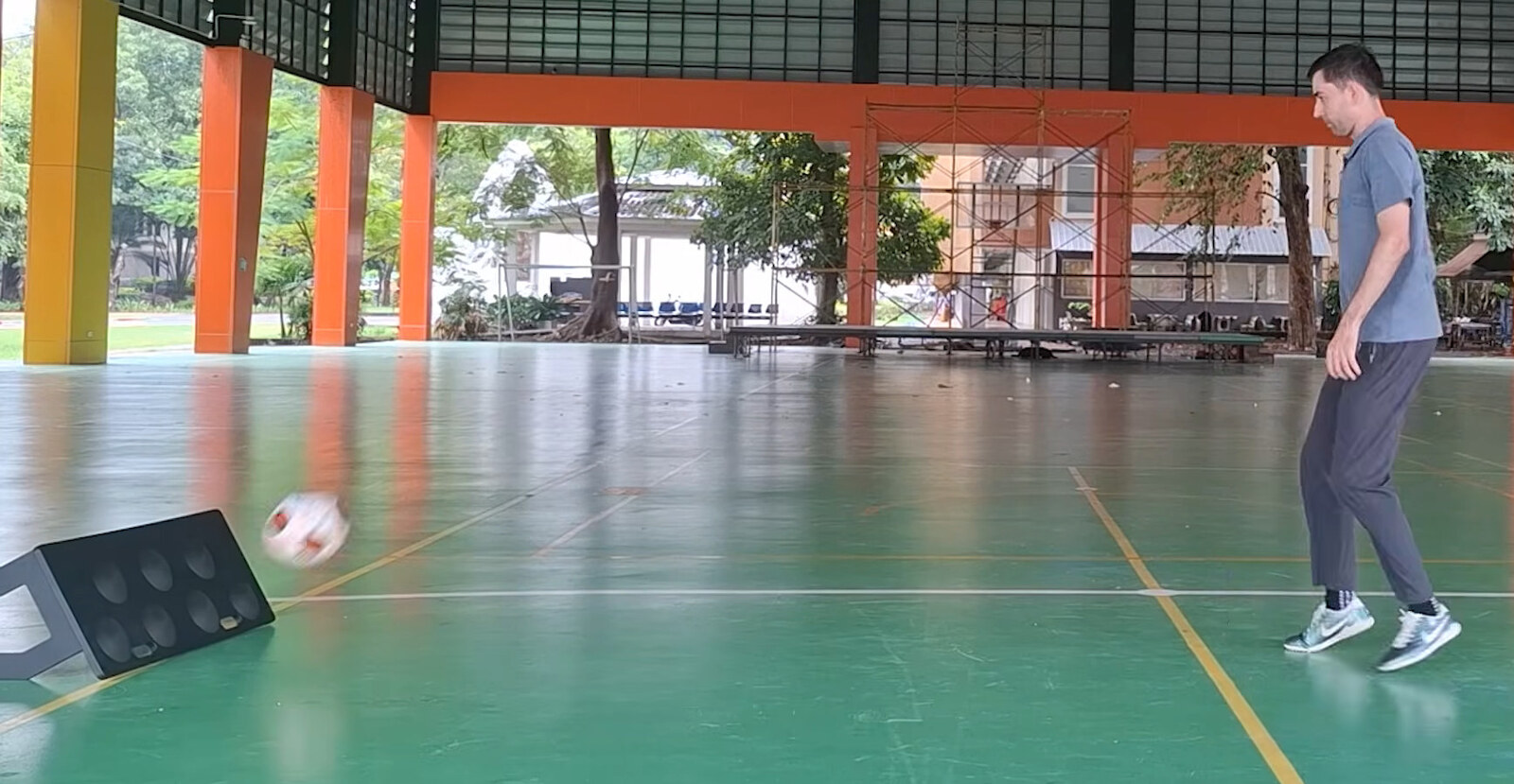
- A varied return. Where a flat board sends the ball back according to how it was played, the domes send it back at an angle that depends on the point of contact, so the player has to react to each return rather than expect it, and they'll be catching the ball from a variety of angles and moving their position to receive the ball.
- Stands on turf and hard floors. Our photos show it on an indoor court. It is heavy enough to stay fairly in place when the ball hits it, with no pegs or weights.
Which board to choose
This is the one for reaction work. Serve into it and the return is not the same twice, so it suits any player: a goalkeeper reading a deflection, or an outfield player taking a first touch on a ball that does not arrive where they expected. It is the same size as the flat board and folds the same way, so the choice is only about the bounce pattern. For passing and first touch repetition with a true return, the flat board is the better choice. Used together, one board gives the clean return and the other the surprise.
What do the dimples do?
They change the return. The face carries rows of round domes, and a ball that hits a dome comes back at an angle set by where it landed, rather than straight back as it would off a flat face. That turns a simple pass into a reaction drill, because the player cannot assume where the ball will arrive. It is more of a challenge than the flat board for the same serve.
What is it made of?
The board is moulded HDPE, a rigid plastic, with the domes formed into the face and a folding frame on each side that holds it leaning back. Two hand slots are cut into the top edge for carrying, and at 11 kg it is best carried short distances. The board is 100 x 40 cm, the same size as the flat rebound board, so the two can be set up side by side or swapped in the same drill, and the frames fold so it stores flat or in a horizontal stack.
How is it different from the flat rebound board?
The flat board returns the ball according to how it was played, so it suits passing and first touch repetition. The dimpled board is the same 100 x 40 cm, but the domes add some random movement to the return, so the player has to read it. Both fold flat for storage, so the difference is only the bounce pattern.
Is it for goalkeepers or outfield players?
All players. A goalkeeper reads the deflection and makes the save, which is the same skill the rebound net trains at a larger scale. An outfield player takes a first touch on a ball that does not arrive where a flat board would have sent it. In both cases the board is served into from a few metres and the player reacts to the return. It is the same drill as the flat board with a different bounce pattern, so the two boards suit the same squad.
How heavy is it?
11 kg, which is heavy enough to stay fairly in place when a ball hits it on turf or a hard floor, with no pegs or weights, and light enough for one person to carry a short distance by the two hand slots in the top edge. Fold the side frames and it stores flat, or in a horizontal stack with the flat boards.
| Board Size | 100 x 40 cm |
| Material | HDPE |
| Side Frames | Folding |
| Weight | 11 kg |
| Email Support | 7 Days per Week |
 Specification Sheet (PDF) English or ThaiSet-up Manual (PDF) English or Thai