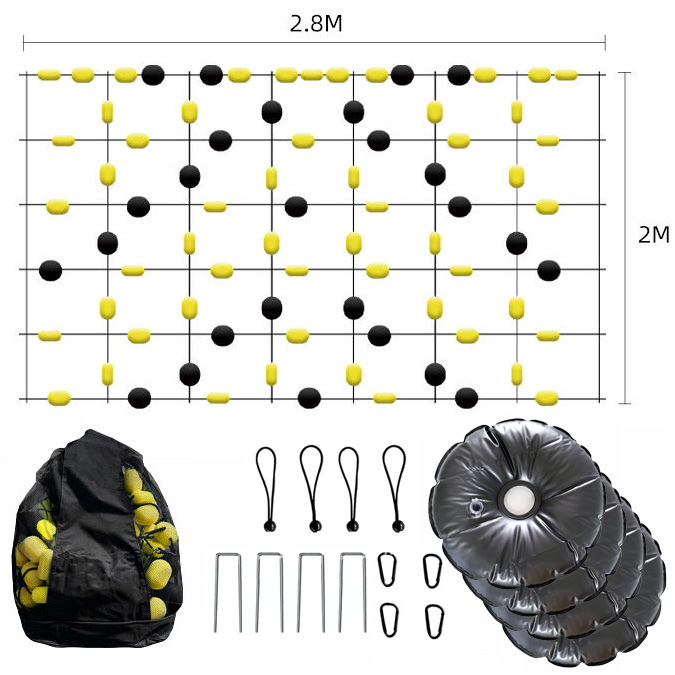
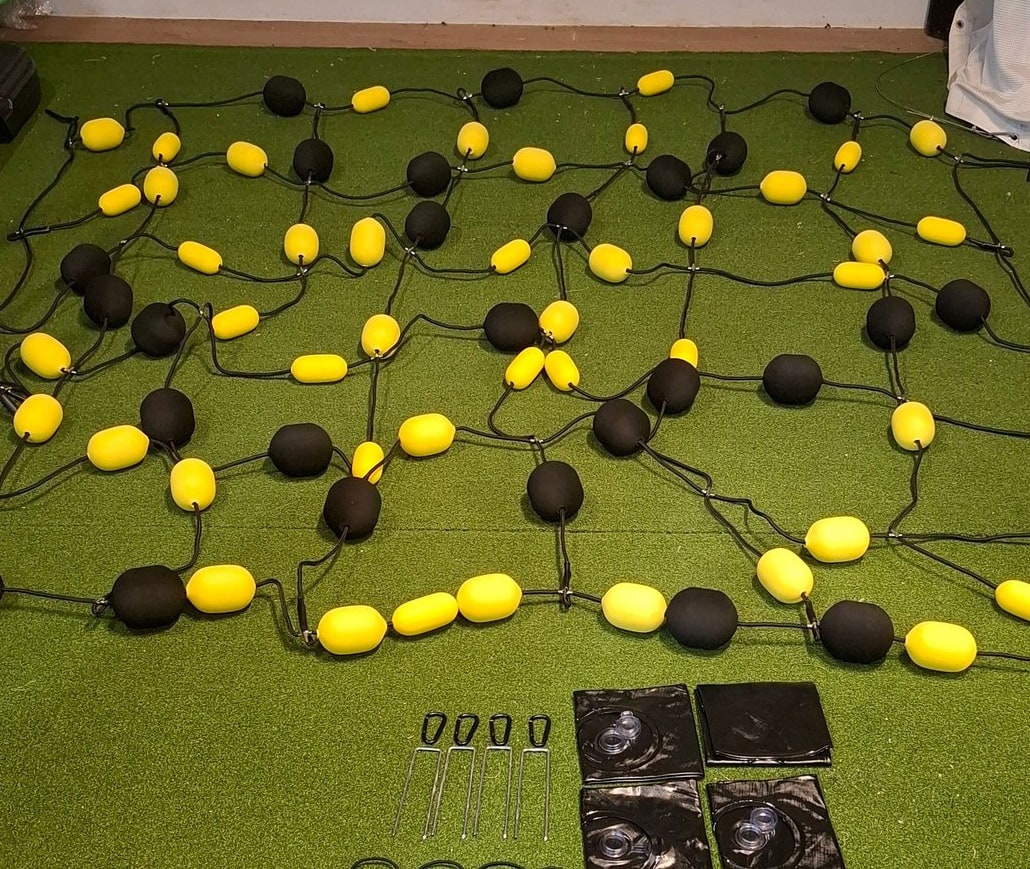
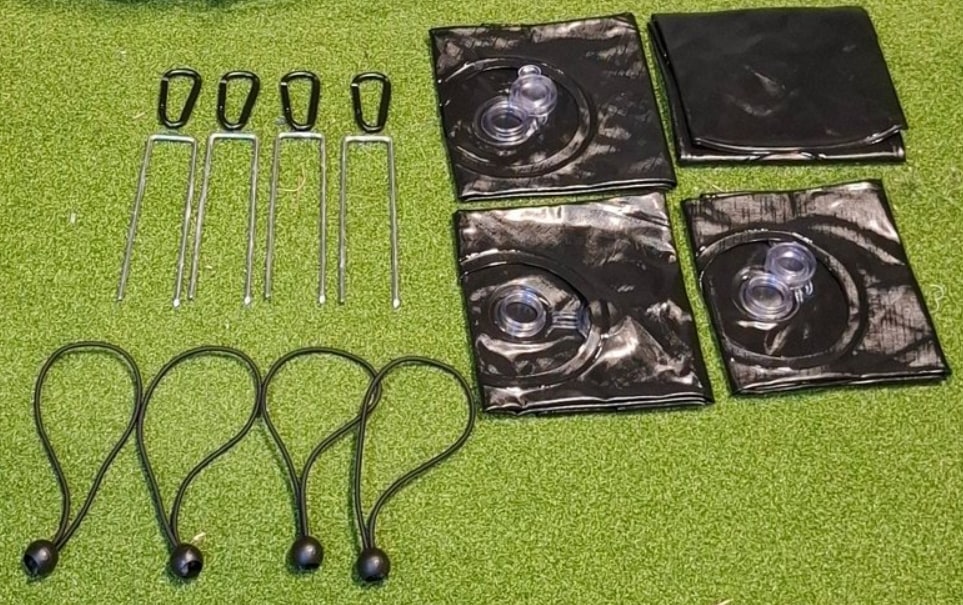
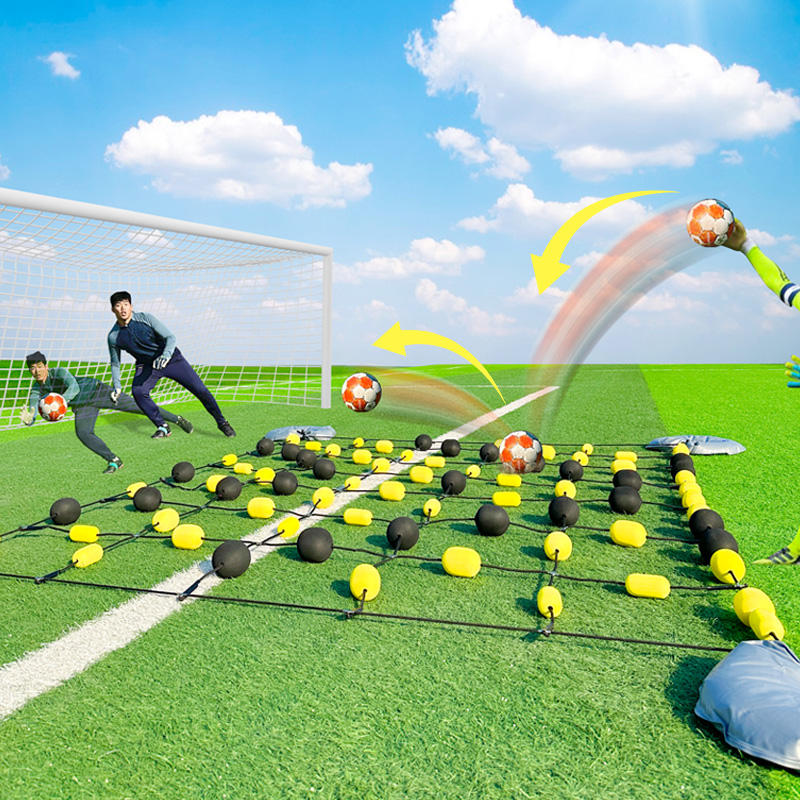

- Rebound Net + 4x Water-Filled Bases + 4x Ground Pegs + 4x Carabiners + 4x Elastic Straps + Carry Bag
- Full Square Net, 2.8 x 2 m (5.6 m²), Not a Single Chain
- Weight: 3.1 kg
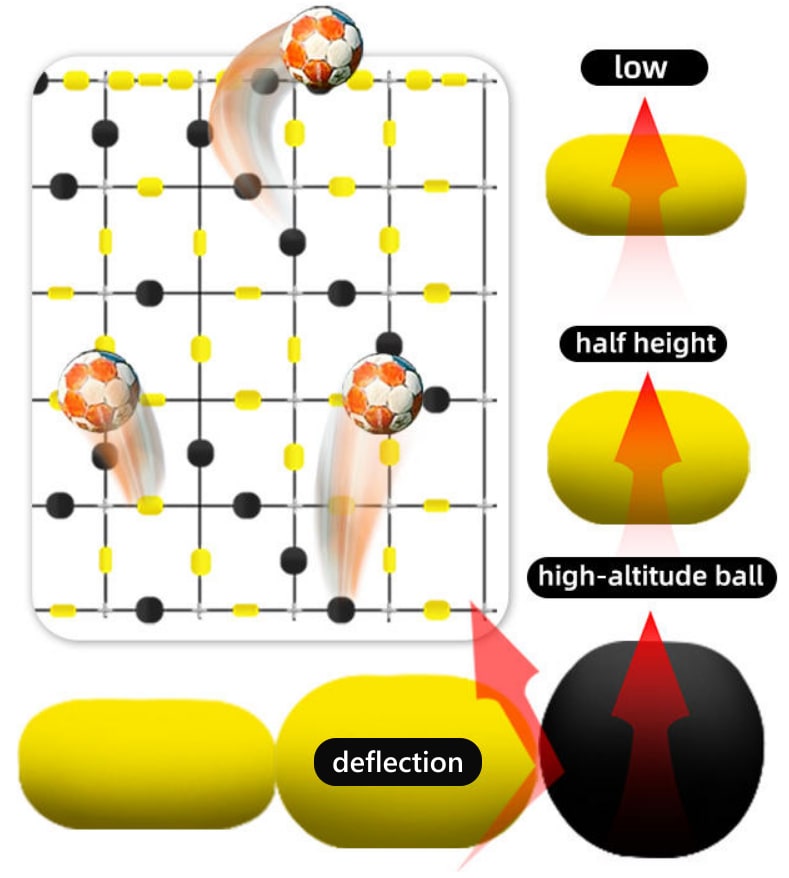
- EVA Foam Balls in 3 Sizes for Low, Half Height and High Deflections
- Water-Filled Bases or Pegs: Works on Grass, Turf and Indoor Floors
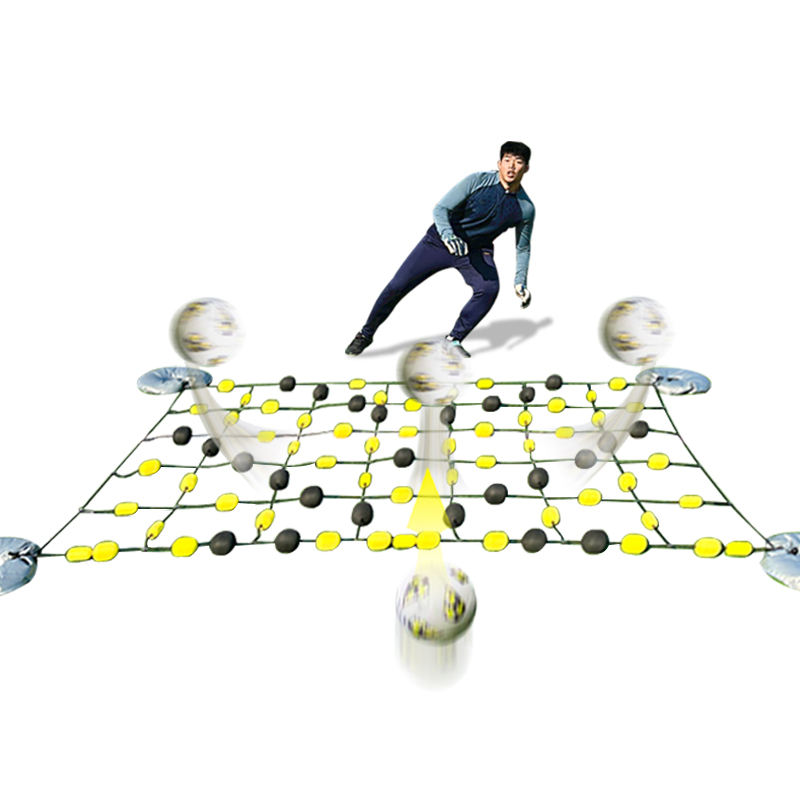
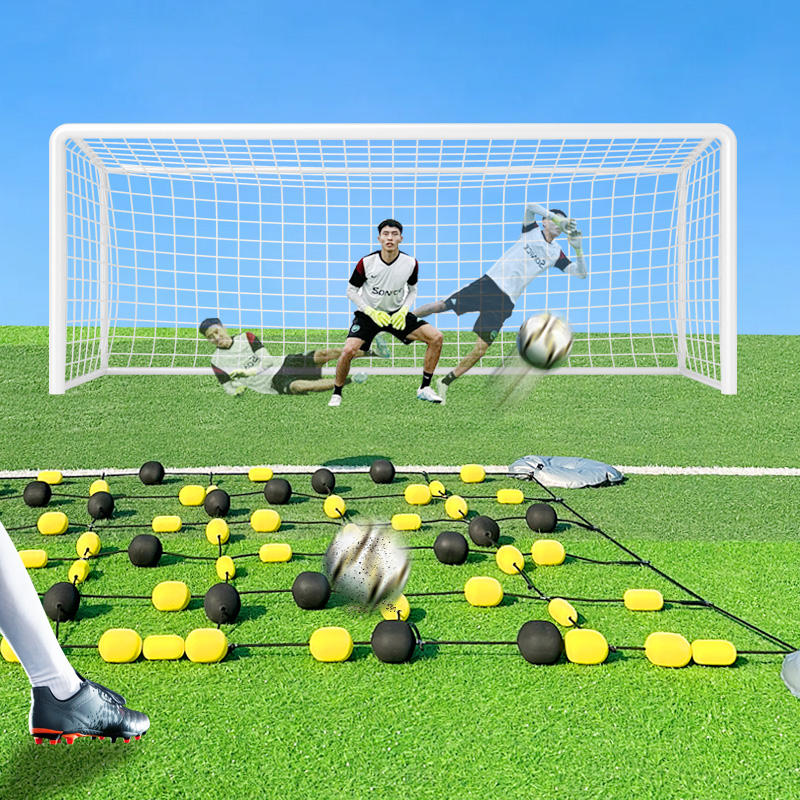
- Unpredictable Deflections for Goalkeeper Reaction Training
Goalkeeper Reaction Rebound Net (2.8 x 2 m)
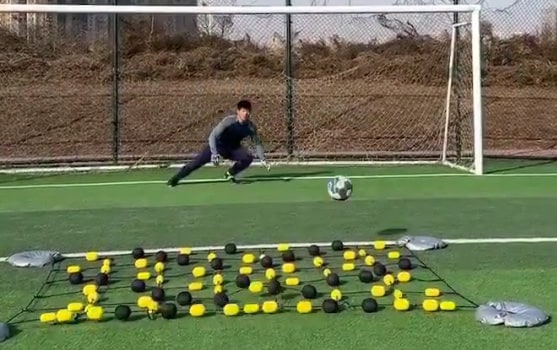
It is the same demand as a deflection in a crowded penalty area, repeated as many times as the coach wants.
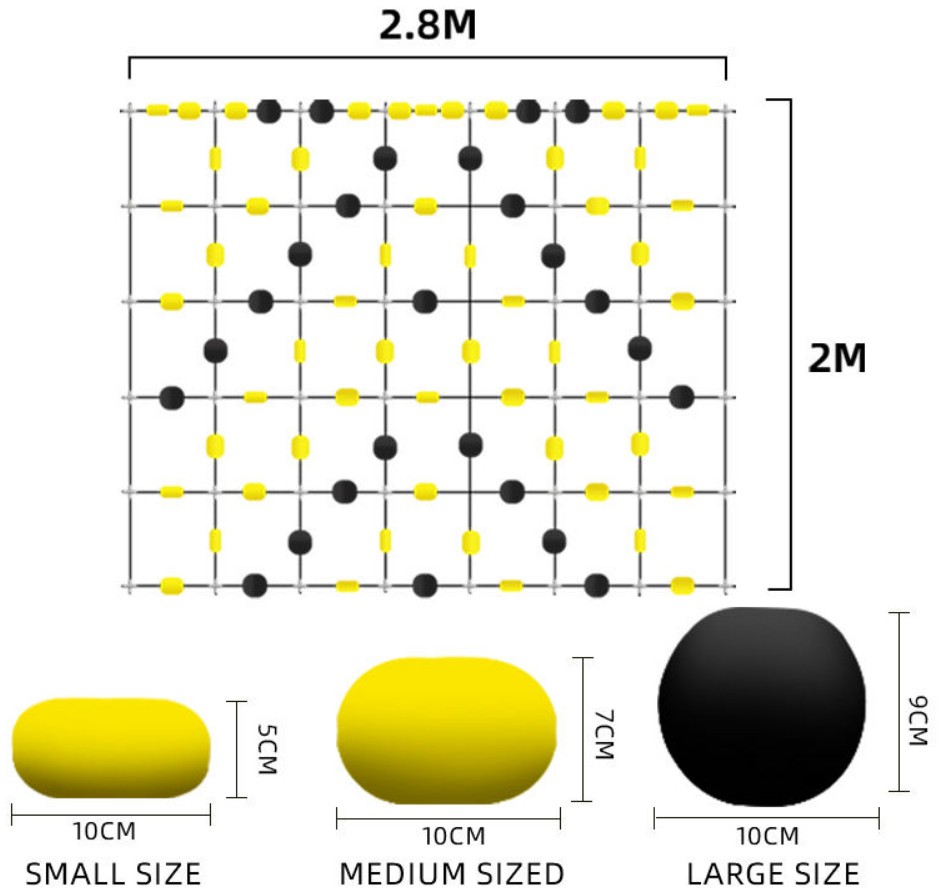
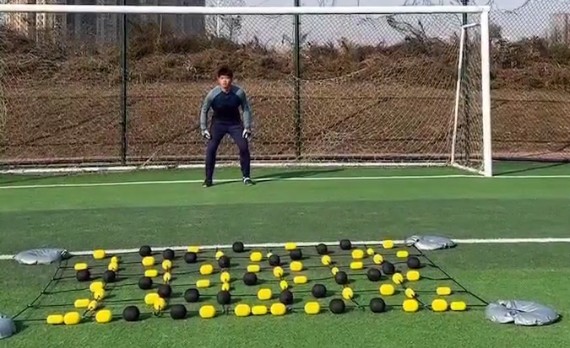
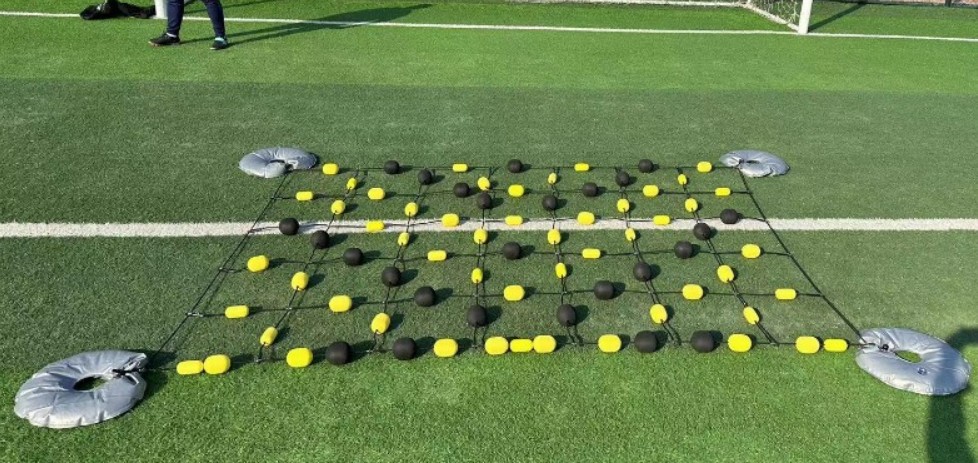
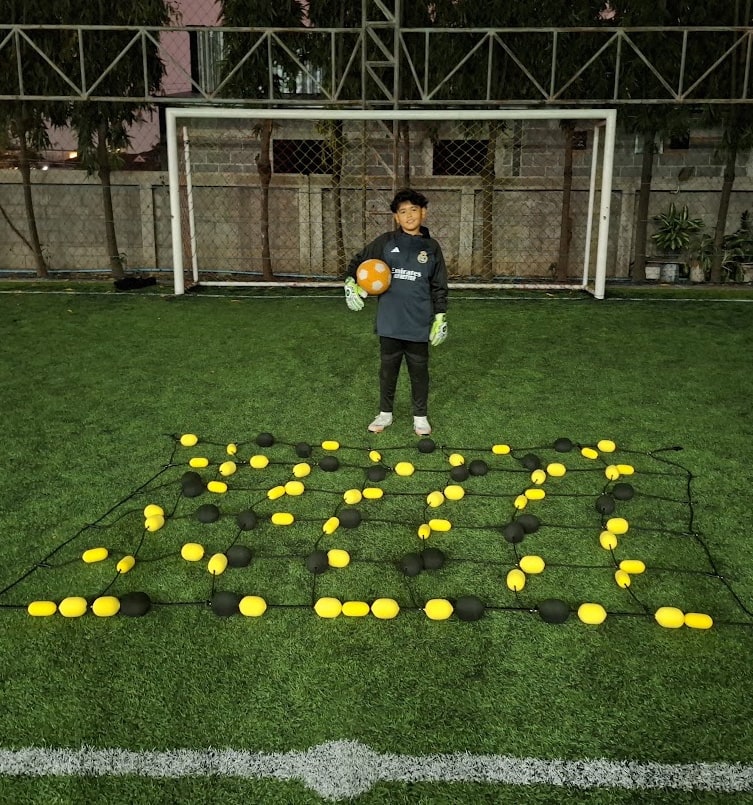
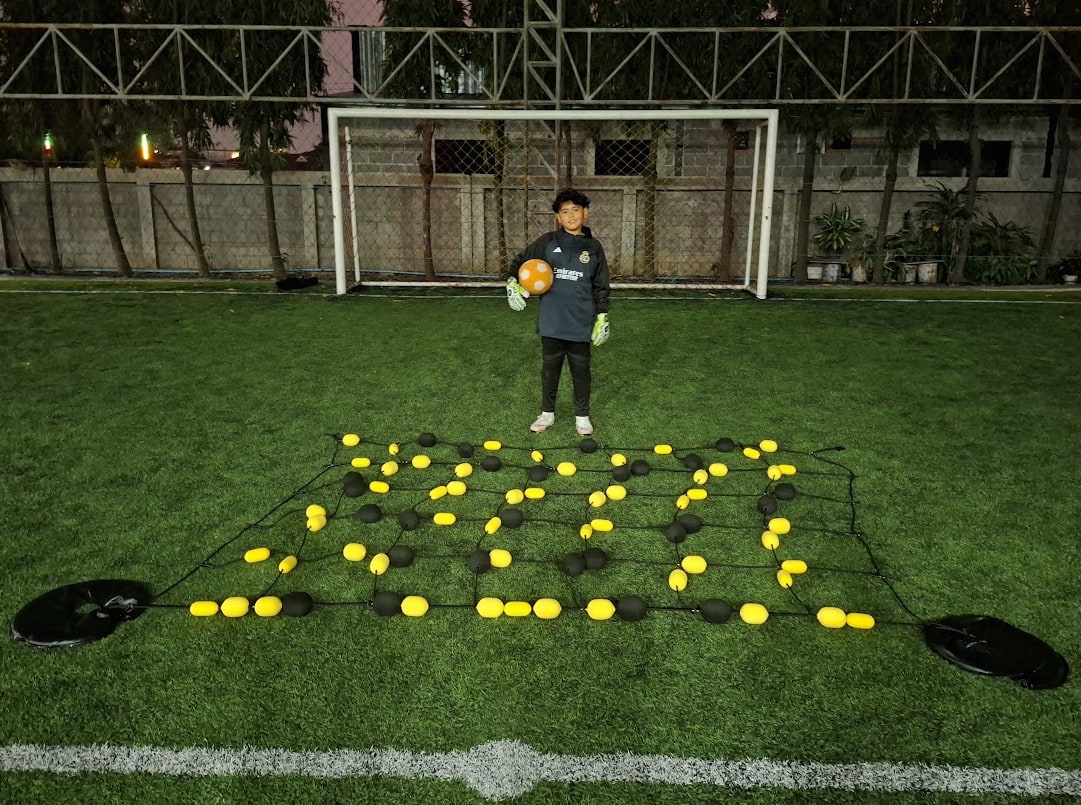
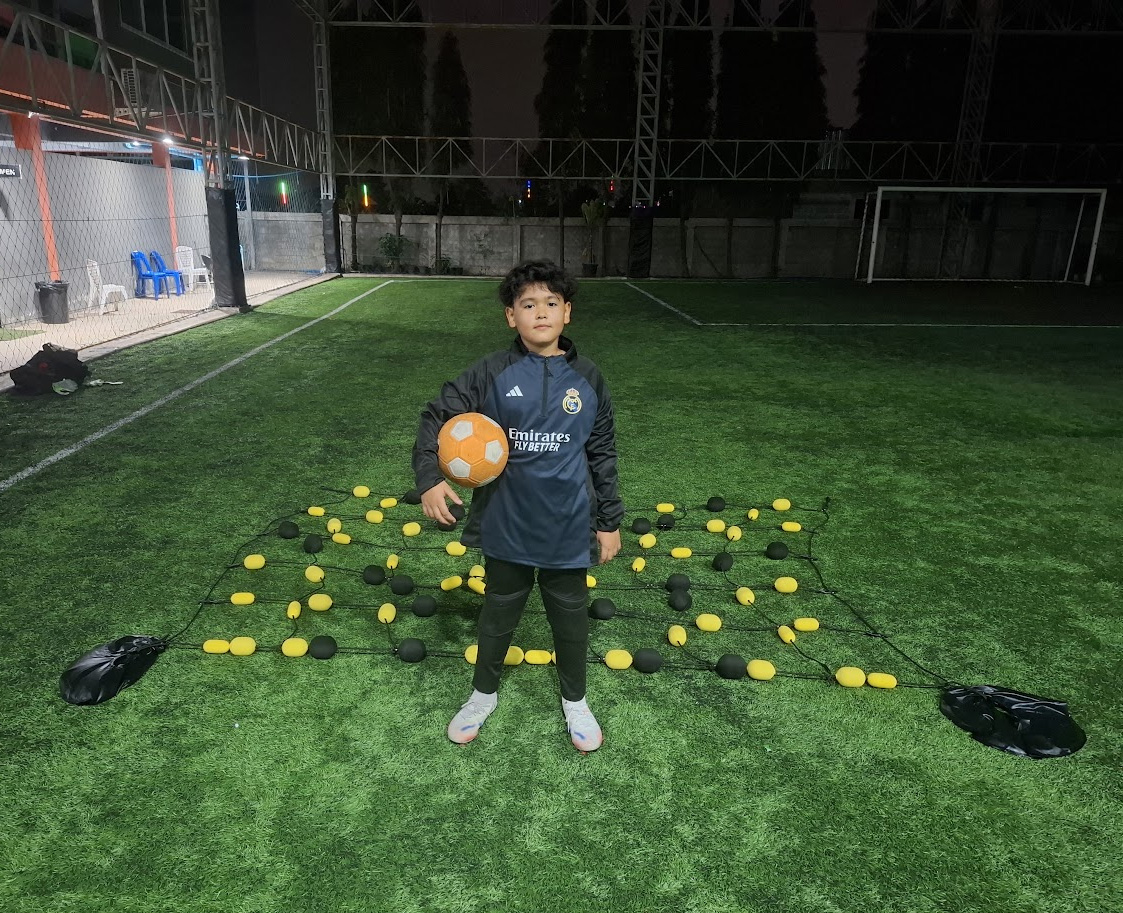
The net is a 2.8 x 2 m grid of elastic cords threaded with yellow and black foam balls, laid flat on the pitch in front of the goal. This is the full square net, not a single line of foam balls, and it is the largest size. It covers 5.6 square metres, wide enough that shots can be taken from a variety of angles.
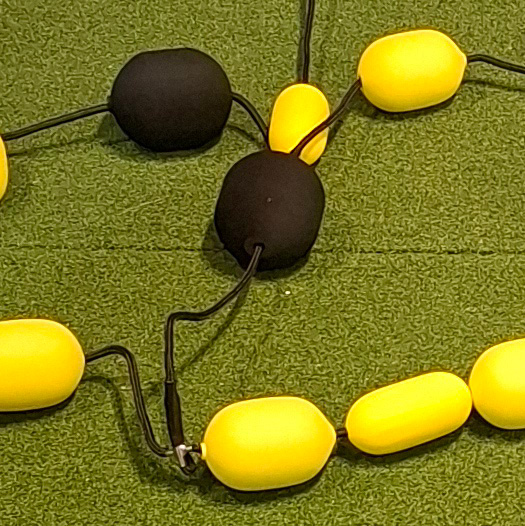
The foam balls come in three sizes, 5, 7 and 9 cm high. The same shot can stay low, pop up to half height, loop high or kick off sideways.
It works on grass, artificial turf and indoor floors. On turf and indoor floors, where nothing can be pegged, 4 water-filled bases hold the corners. On grass, the 4 steel ground pegs can be used instead.
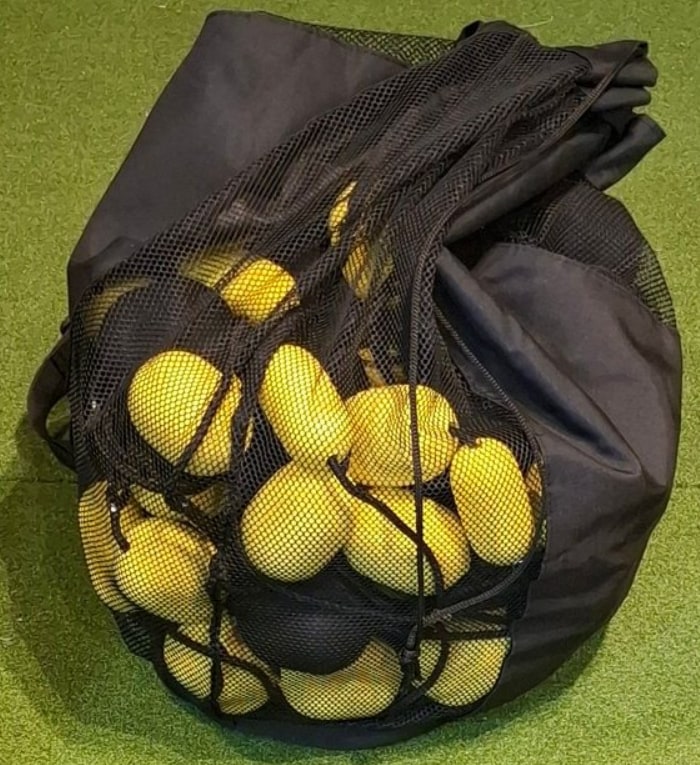
Set up takes a few minutes: fill the bases, clip the corners, pull the net taut. When emptied, the bases fold flat and the whole set packs into its carry bag.
The set-up manual gives a basic drill to start from. It needs one server and one goalkeeper.
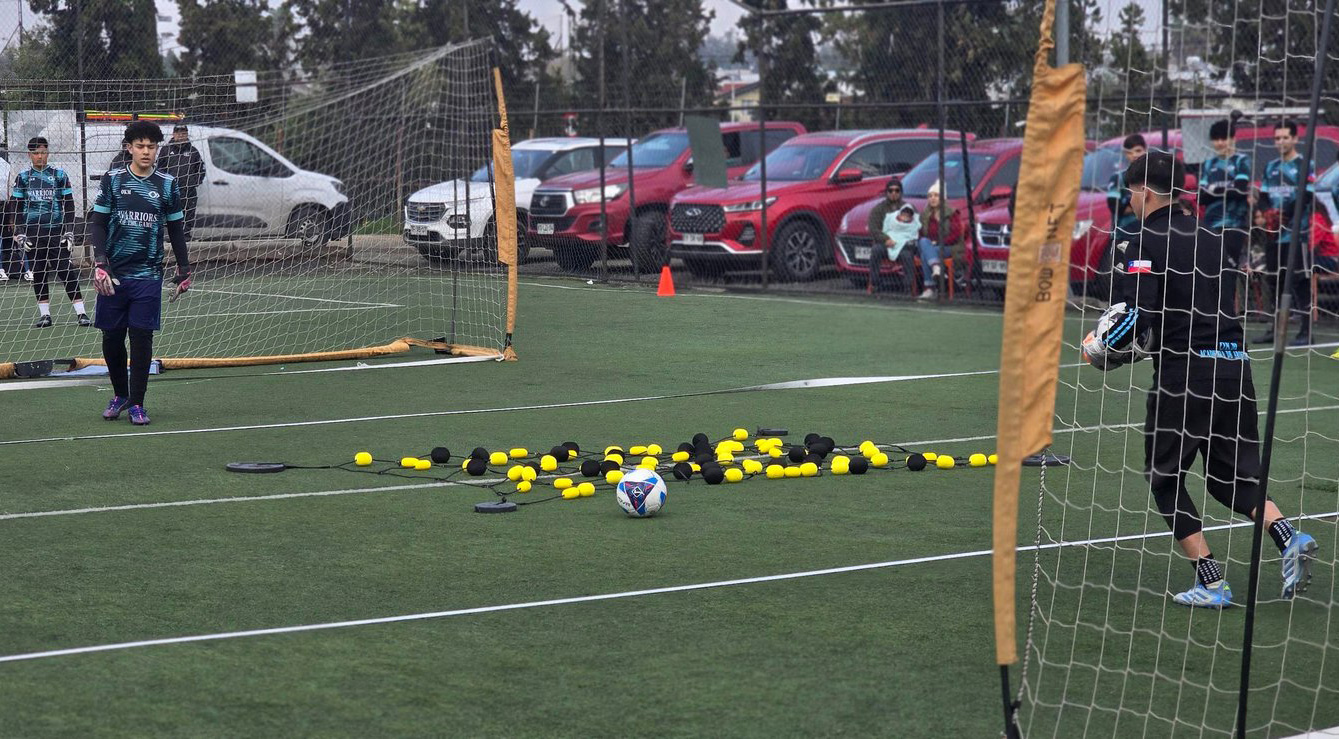
- Where the net goes. Lay it 3 to 5 m in front of the goal, with the goalkeeper on the goal line in a set position.
- The serve. The server stands 8 to 12 m out and plays a firm, low ball onto the net. A driven pass, a half volley or a throw all work.
- The save. The goalkeeper reacts to the deflection, makes the save, then recovers to the set position before the next ball.
- Sets. Work in sets of 6 to 10 balls with a rest between sets. Quality of reaction matters more than volume.
Making it harder or easier
- Move the net closer to the goal to shorten the reaction time, or further away to make it easier for younger goalkeepers.
- Start the goalkeeper side on, facing away or lying down, and call "turn" as the ball is played.
- Add a second server, so the goalkeeper does not know which side the ball will come from.
- Follow every save with a second action: a recovery save, a distribution throw or a sprint to a cone.
Fixing the corners
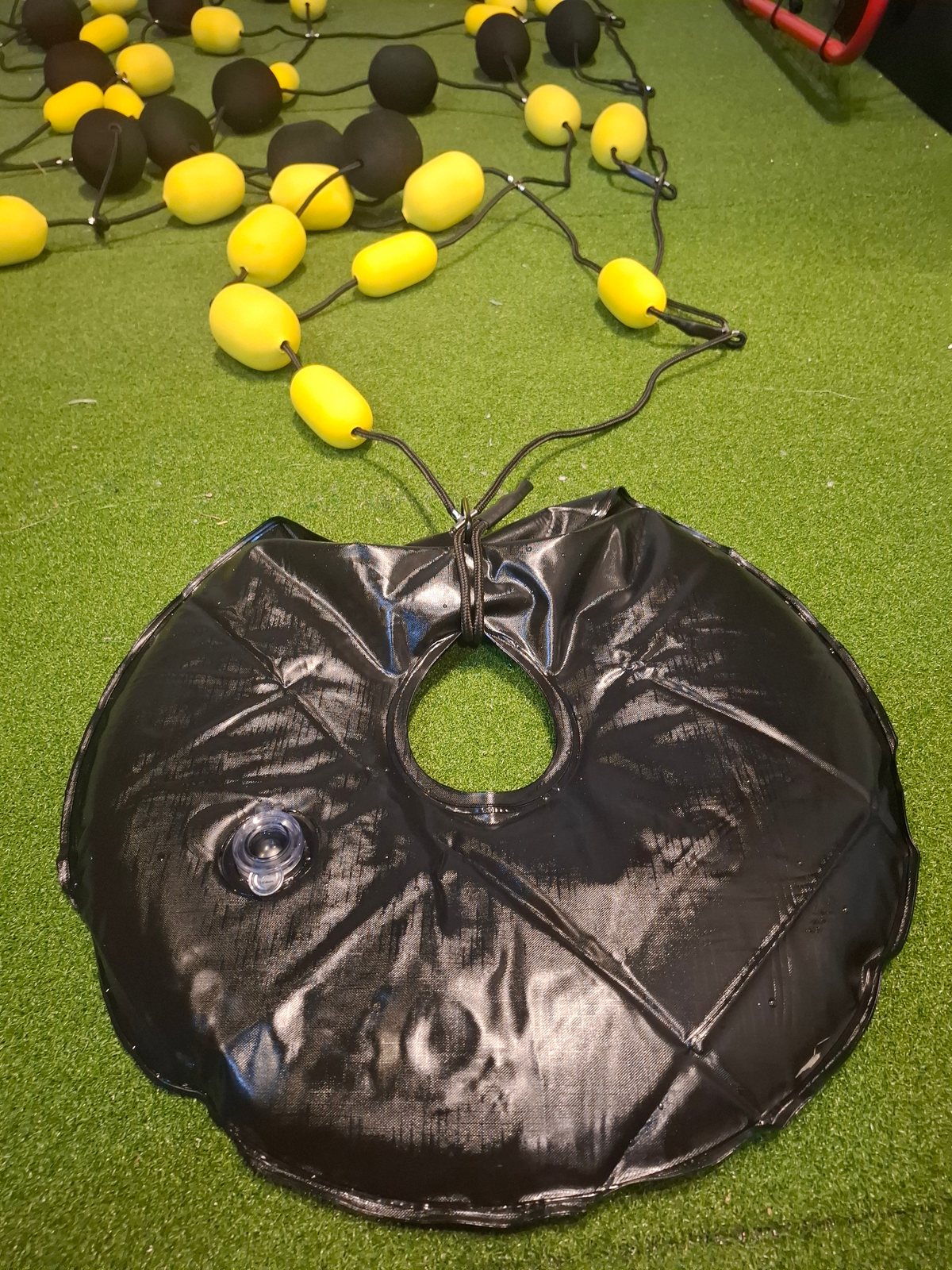
- Water-filled bases. Each corner of the net ends in a cord loop. Clip a carabiner to the loop, pass it through the centre hole of the base, bring it back over the ring and clip it a little higher up the cord. Then pull the bases outwards until the net is fairly taut.
- Ground pegs. On grass and dirt, pull the net taut and push a peg through each corner loop, into the ground instead (without using the water-filled bases). An elastic strap can go between each peg and the corner cord if you wish.
- Two corners or four. Fixing down only 2 corners works reasonably well when the ball comes from one direction. Fixing all 4 means less readjusting during the session, and the net can be shot at from any side.
- Filling. There is no need to overfill a base. Fill the bases where they will be used, to avoid carrying them when they are heavy.
Care and storage
- Drain the bases fully through the valve after use and let them dry before folding.
- Do not drag a filled base across rough ground. Lift it, or empty it first.
- Keep the bases away from studs, glass and other sharp objects.
- Store the net loosely coiled in its carry bag, out of direct sun.
Who this suits
Goalkeeper coaches who want to train deflection saves without needing assistant players in the box. Because the water-filled bases are included, it suits clubs, academies and schools that train on artificial turf or indoor floors, where a pegged net cannot be used.
Does the rebound net work on artificial turf or an indoor floor?
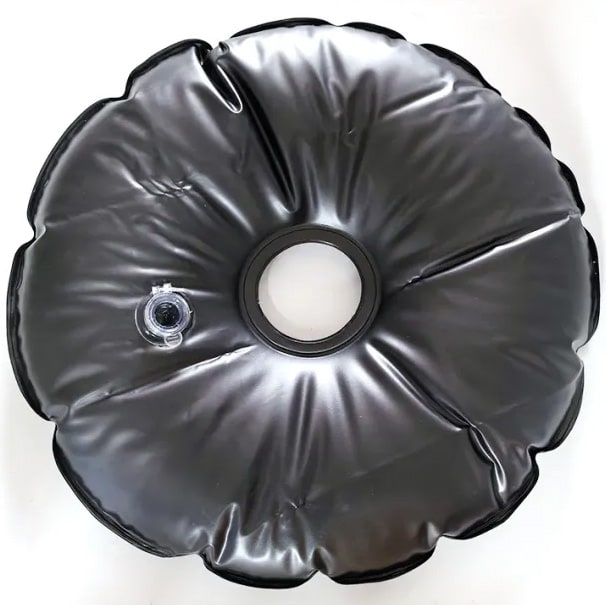
Yes, it works on artificial turf and indoor floors, because it comes with 4 water-filled bases for surfaces where nothing can be pegged. Each base is a flat PVC ring that fills from a hose through a valve, and one holds each corner of the net. On grass, you can use the 4 steel ground pegs instead.
How far from the goal should the net be?
Lay the net 3 to 5 m in front of the goal, with the goalkeeper on the goal line. The server stands 8 to 12 m out and plays a firm, low ball onto the net. Move the net closer to the goal to shorten the reaction time, or further away to make it easier for younger goalkeepers.
Do all four corners need to be fixed down?
No, fixing down 2 corners works reasonably well when the ball only comes from one direction. Fixing all 4 means less readjusting during the session, and the net can be shot at from any side. With the water-filled bases, pull them outwards until the net is fairly taut and forms a rectangle of about 2.8 x 2 m.
How is the full square net different from a single rebound chain?
The full square net is a 2.8 x 2 m grid covering 5.6 square metres, where a single chain is one line of foam balls. The grid is wide enough that shots can be taken from a variety of angles. Foam balls in three sizes, 5, 7 and 9 cm high, mean the same shot can stay low, pop up to half height, loop high or kick off sideways.
How should the net and water-filled bases be stored?
Drain the bases fully through the valve and let them dry before folding. Store the net loosely coiled in its carry bag and out of direct sun. Everything fits in the carry bag. Keep the bases away from studs, glass and other sharp objects, and never drag a filled base across rough ground.
How heavy is the set to carry?
The set weighs 3.1 kg before the bases are filled, and it all packs into the carry bag. The water-filled bases fold flat once drained. A filled base is heavy, so you may fill the bases where they will be used, rather than carrying them full across the pitch.
| What's Included | Rebound Net, 4x Water-Filled Bases, 4x Steel Ground Pegs, 4x Carabiners, 4x Elastic Straps, Carry Bag |
| Net Size | 2.8 x 2 m (5.6 m², full square net) |
| Weight | 3.1 kg |
| Net | Elastic cord with yellow and black EVA foam balls |
| Foam Ball Sizes | 10 x 5 cm, 10 x 7 cm and 10 x 9 cm |
| Bases | PVC ring, water filled through a valve |
| Elastic Straps | Go between the ground pegs and the corner cords |
| Surfaces | Grass, artificial turf, indoor floors |
| Email Support | 7 Days per Week |
 Specification Sheet (PDF) English or ThaiSet-up Manual (PDF) English or Thai