
Text neck, also called phone neck, is the name given to neck pain and stiffness blamed on hours spent looking down at a phone. It is not a medical diagnosis. The idea is simple: the head tips forward over the screen, the neck muscles work harder to hold it there, and over months the posture and the pain set in. The research tells a more useful story. The head really does tip 33 to 45 degrees over a phone,1 and heavy phone use is associated with more neck pain,2 but a 12 month study found the angle of the neck did not predict who got neck pain, while poor sleep and too little exercise did.3 What helps is the same as for office neck pain: strengthening the muscles that hold the head up, with the opposite movement to phone posture, the chin tuck and neck extension, at the centre of the programme.4,5 The studies are listed at the bottom of the page.
This article is general information, not medical advice. Neck pain that follows an accident or a fall, comes with numbness, tingling or weakness in the arms or hands, with fever, severe headache or dizziness, or that does not ease after a few weeks of the steps below needs a doctor or a physiotherapist.
Text Neck at a Glance
What Is Text Neck?
Text neck describes neck pain, stiffness and a forward head posture attributed to long periods looking down at a handheld screen. Phone neck means the same thing. In the research it sits inside a wider group, nonspecific neck pain, which means neck pain without a disc, nerve or joint problem a scan or an examination can find. It is the same group as office syndrome neck pain, and the difference is only where the head is pointed: down at a phone rather than forward at a monitor.
A 2023 review of 41 papers on text neck found that 92.7 percent were concerned with posture, but it concluded there was no scientific evidence yet linking text neck posture with neck pain.6 That is the tension this article works through: the posture is real and easy to see, the pain is real and common, and the link between them is weaker than the name suggests.
How Far Does the Head Tip?
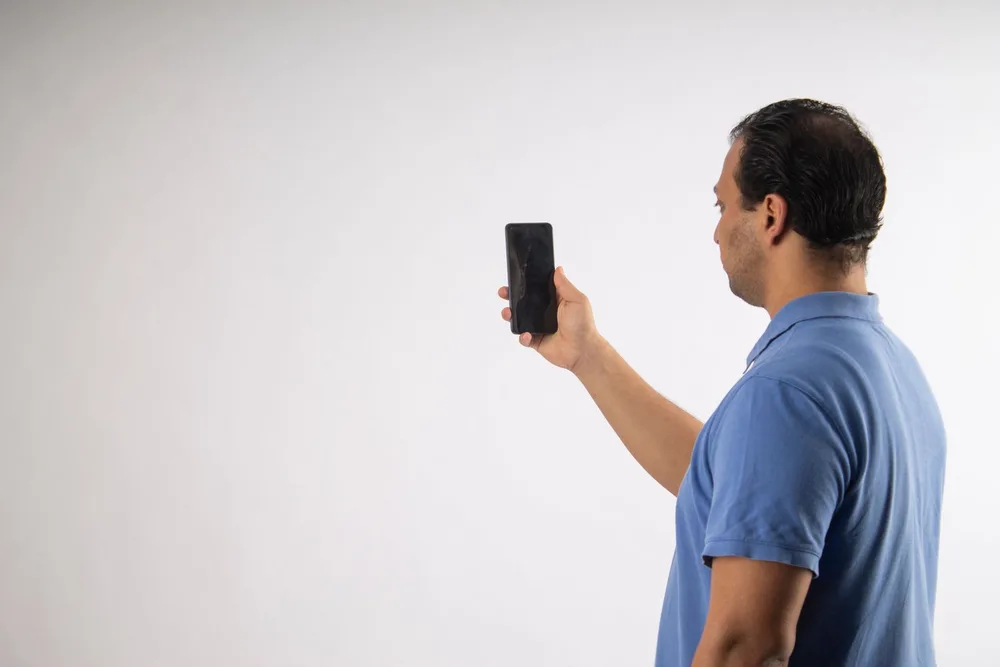
Lee and colleagues measured head flexion in people using a phone and found the head tipped between 33 and 45 degrees from upright, more during texting than during web browsing or video watching, and more when sitting than when standing.1
A widely quoted paper by Hansraj modelled the load on the neck as the head tips forward and reported that the load on the cervical spine rises sharply as the head flexes forward.7 It was a computer model, not a measurement in people, and it does not show harm, only load. Muscle studies fill in what the load means: a 2018 review of 12 studies found that phone use raised the activity of the upper trapezius and neck extensor muscles and increased head flexion, with more forward head posture in heavier users.8 Those are the muscles at the back of the neck and across the top of the shoulders, the ones that ache after a long scroll.
Does Phone Use Change the Shape of the Neck?
Forward head posture, where the ear sits in front of the shoulder, is the change people worry about. A 2019 review of 15 studies found that adults with neck pain did have a greater forward head posture than adults without it, by 4.84 degrees of craniovertebral angle on average, and that the more forward the head the greater the pain intensity and disability.9 Two things complicate the picture. First, the same review found no association in adolescents, the heaviest phone users, and a 2019 review of adolescents with neck pain found no posture difference from those without it.9,10 Second, those were snapshots, and a snapshot cannot say whether the posture caused the pain or the pain changed the posture.
The study that can is the Brazilian text neck cohort. Correia and colleagues measured the neck angle of 582 adults using a phone and found no association between the angle and neck pain at the time.11 They then followed 457 of them who were pain free for 12 months; 396 completed the year and 40 (10 percent) developed neck pain. The text neck angle did not predict it (odds ratio 1.0). An odds ratio compares the odds of pain between two groups: 1.0 means no difference, above 1 means higher odds and below 1 means lower odds. Low sleep quality did (odds ratio 1.76) and so did insufficient physical activity (odds ratio 2.41).3 So far, the best evidence says that bad posture when using a phone is not what decides who gets pain, but inactivity and lack of sleep do.
Can Phone Use Permanently Change a Child's Neck or Spine?
No study has shown that it does. The worry makes sense, because a child's spine is still growing, but the research so far has not found a lasting change in the bones from looking down at a screen. A 2024 systematic review searched for studies of screens and head and neck posture in adolescents and found only four that qualified. The three rated good quality, all on computer use, found little difference in posture, and the review concluded that computer use is not responsible for postural changes of the head and neck in adolescents. The one smartphone study found a more forward head in heavy users, but it was rated poor quality. That is a gap in the research: the review found no good quality study of smartphone use and head and neck posture in adolescents.16
The longest follow up is the Raine Study in Western Australia. Researchers photographed the sitting posture of 17 year olds and asked 686 of them about neck pain at 22. A slumped, forward head posture at 17 did not raise the risk of persistent neck pain five years later.17
The conditions that do change the shape of a growing spine have other causes. Scheuermann's kyphosis, a fixed rounding of the upper back that appears during the growth years, runs in families: a Danish study of almost 35,000 twins put its heritability at 74 percent, with 2.8 percent reporting the diagnosis.18 Scoliosis, a sideways curve, has one screen study worth knowing. Among 1,488 school students aged 9 to 17 in Shenzhen, those with two or more hours of screen time a day had 3.40 times the odds of adolescent idiopathic scoliosis, inactive students had 2.14 times the odds, and those with both had 8.84 times. It compared students who already had scoliosis with those who did not, so, as the authors say, it cannot show which came first.19
So the answer for a parent is "not shown, and not ruled out". Nobody has followed heavy phone users from childhood into adult life with X-rays. What the studies do agree on is that long hours sitting still and too little activity matter more than the angle of the neck. A rounded back that straightens when the child stands tall or lies flat is posture, and posture changes with strength and habit. A back that stays rounded, a spine that curves to one side, uneven shoulders or hips, or back or neck pain that lasts more than a few weeks is a reason to see a doctor.
Posture or Hours?
Hours matter more than angle. A 2025 meta analysis of seven studies with 10,715 people found that smartphone overuse was associated with neck pain, with pooled odds 2.34 times higher than in lighter users.2 In 779 Thai university students in Khon Kaen, 32.5 percent had neck pain, and using the phone with the neck flexed was associated with it (odds ratio 2.44), as was smoking.12 A Swedish study followed young adults for five years and found that heavy texting was associated with new neck and upper back pain and with new hand symptoms, with odds ratios between 1.3 and 2.0.13
Put together, the studies point at the amount of use, the lack of movement and sleep around it, and, in the Thai students, the flexed position, rather than at a permanent change in the neck. That is good news, because hours and movement are easier to change than the shape of a spine.
What Helps: Move the Other Way
Phone posture is flexion: the chin drops and the head drifts forward. The exercises with the best evidence are the opposite movements, done against resistance so the muscles get stronger rather than just looser.
A 2018 meta analysis of seven randomised trials with 627 people found that exercise improved forward head posture (craniovertebral angle, odds ratio 6.7) and reduced neck pain (odds ratio 0.3), with programmes that strengthened the deep neck flexors (chin tucks), the neck extensors and the shoulder blade muscles, some with added stretching.4 A 2024 review of 23 studies with 969 participants went further: long term strengthening of the neck and upper back changed forward head posture with a large effect (d = 0.83), while stretching on its own had no measurable effect on posture.5 A 2025 review of 15 studies reached the same place: the programmes that combined strengthening with manual therapy and posture work did best.14
Stretching can still ease the pain. In a Thai trial of 96 office workers with neck pain lasting three months or more, stretching the neck and shoulders twice a day, five days a week for four weeks reduced pain by 1.4 points more on a 0 to 10 scale than an ergonomics brochure alone.20 So stretching the opposite way is worth doing for the pain, but it is the strengthening that moves the head back over the shoulders, and it reduces pain as well. The moves:
- Chin tuck. Sitting tall, draw the chin straight back as if making a double chin, without tipping the head. Hold five seconds, ten times. This trains the deep neck flexors that hold the head in place.4
- Chin tuck with lift. Lying on your back, tuck the chin and lift the head a centimetre off the floor. Hold five to ten seconds, five to ten times. Hard at first.
- Resisted extension. Hands clasped behind the head, push the head back into them without letting it move. Five seconds, ten times. The direct opposite of the phone position.
- Shoulder blade squeeze and rows. Pull the shoulder blades back and down, hold five seconds; and rowing with a band or dumbbell, two or three sets of ten to fifteen, two or three times a week. These are the shoulder muscles the 2018 review strengthened alongside the neck.4
- Look up. Between sets, stand, reach the arms up and look at the ceiling for a breath or two. Not a treatment, just a reset.
Notice that they all do the opposite of the head falling forward phone posture. The companion article on office syndrome neck pain has the full weekly plan, with the trials it comes from.

Text Neck Exercise Programme
Reducing the Load
The strengthening is important for treatment. Reducing the hours and the angle, which is what the cohort and the Thai study pointed at, can target the cause:3,12
- Raise the phone, not the head. Hold it near eye level with the elbow supported, on a desk or against the chest. Standing produced less head flexion than sitting in the measurement study.1
- Use voice and headphones for calls and audio. No screen, no flexion.
- Break every 20 minutes. Look up, roll the shoulders back, two chin tucks. The office trials found short frequent breaks reduced discomfort without reducing output.15
- Sleep and move. In the 12 month cohort, poor sleep and too little exercise predicted neck pain and phone angle did not.3 Thirty minutes of brisk walking most days and a regular bedtime are neck exercises too.
- Watch the hours. Most phones show weekly screen time. The 2025 meta analysis placed the risk with overuse, not with ordinary use.2
Prevention and Habits
When to See a Doctor
Text neck is a dull ache across the back of the neck and the top of the shoulders that builds with screen time and eases with movement. See a doctor without waiting if the pain started with a road accident, a fall or a blow to the head; comes with numbness, tingling or weakness in the arms or hands, clumsiness or trouble walking; comes with fever, a severe or unusual headache, or a neck too stiff to bring the chin to the chest; wakes you at night or is steadily worsening; or has not improved after four to six weeks of the exercises above.
Frequently Asked Questions
Is text neck permanent?
No evidence says so. Forward head posture in adults with neck pain is a few degrees greater than in adults without it,9 and the randomised trials show strengthening exercise moves it back: the craniovertebral angle improved in the 2018 meta analysis and the 2024 review found a large effect from long term strengthening.4,5 A posture held for hours a day is a habit the muscles can be trained out of, not a fixed change in the bones.
Can phone use permanently deform a child's neck or spine?
No study has shown that it does. A 2024 review found only four studies of screens and adolescent posture, and the good quality ones found no postural change from computer use.16 In an Australian cohort, a slumped posture at 17 did not predict persistent neck pain at 22.17 Nobody has followed children into adult life with X-rays, so it is not ruled out. Keep children active, and see a doctor about a curve that does not straighten.
Does looking down at a phone cause neck pain?
Heavy use is associated with it, the angle on its own is not. Seven studies pooled found smartphone overuse raised the odds of neck pain 2.34 times,2 but the only study that measured the neck angle and then followed people for a year found the angle did not predict who got pain, while poor sleep and inactivity did.3 Hours, sleep and movement matter more than the exact tilt.
Is stretching in the opposite direction enough?
Not on its own. The 2024 review of 23 studies found stretching had no measurable effect on forward head posture, while strengthening the neck and upper back over months had a large one.5 Stretching can ease neck pain, as a Thai trial in office workers found,20 but chin tucks, resisted extension and shoulder blade work against resistance are what change the posture.
What is the best exercise for text neck?
The chin tuck, progressed to holding it against resistance, plus rows for the shoulder blades. The seven randomised trials in the 2018 meta analysis strengthened the deep neck flexors (chin tucks), the neck extensors and the shoulder blade muscles and improved both posture and pain.4 Ten chin tucks held for five seconds, twice a day, is a start anyone can make at a desk.
How should I hold my phone?
Higher, with the elbows supported, and standing when you can. The measurement study found 33 to 45 degrees of head flexion over a phone, with more flexion when sitting than standing and more when texting than watching video.1 Bringing the screen up to chin or eye level removes most of the tilt, and a short look up every 20 minutes removes the rest.
Is text neck the same as office syndrome?
Same group, different screen. Both are nonspecific neck pain from a head held forward of the shoulders for hours, and a similar strengthening programme treats both.4 The office version has more Thai research behind it, including a programme that roughly halved new cases over a year; see office syndrome neck pain.
Related Reading
- Office syndrome neck pain: the desk version, with the Thai cohorts, the full exercise programme and the weekly plan.
- Office syndrome shoulder pain: the trapezius trials and the shoulder side of the same problem.
- Beep test VO2max calculator: a fitness check, since insufficient physical activity predicted neck pain in the 12 month cohort.
References
- Lee S, Kang H, Shin G. Head flexion angle while using a smartphone. Ergonomics. 2015;58(2):220-226. doi:10.1080/00140139.2014.967311
- Chen YJ, Hu CY, Wu WT, et al. Association of smartphone overuse and neck pain: a systematic review and meta-analysis. Postgraduate Medical Journal. 2025;101(1197):620-626. doi:10.1093/postmj/qgae200
- Correia IMT, Ferreira AS, Gomes JFM, et al. Cervical flexion posture during smartphone use was not a risk factor for neck pain, but low sleep quality and insufficient levels of physical activity were. A longitudinal investigation. Brazilian Journal of Physical Therapy. 2025;29(6):101258. doi:10.1016/j.bjpt.2025.101258
- Sheikhhoseini R, Shahrbanian S, Sayyadi P, O'Sullivan K. Effectiveness of therapeutic exercise on forward head posture: a systematic review and meta-analysis. Journal of Manipulative and Physiological Therapeutics. 2018;41(6):530-539. doi:10.1016/j.jmpt.2018.02.002
- Warneke K, et al. Changing posture through stretching and strengthening: a systematic review with meta-analysis. Sports Medicine Open. 2024;10(1):65. doi:10.1186/s40798-024-00733-5
- Grasser T, Borges Dario A, Parreira PCS, Correia IMT, Meziat-Filho N. Defining text neck: a scoping review. European Spine Journal. 2023;32(10):3463-3484. doi:10.1007/s00586-023-07821-2
- Hansraj KK. Assessment of stresses in the cervical spine caused by posture and position of the head. Surgical Technology International. 2014;25:277-279. PubMed 25393825
- Eitivipart AC, Viriyarojanakul S, Redhead L. Musculoskeletal disorder and pain associated with smartphone use: a systematic review of biomechanical evidence. Hong Kong Physiotherapy Journal. 2018;38(2):77-90. doi:10.1142/S1013702518300010
- Mahmoud NF, Hassan KA, Abdelmajeed SF, Moustafa IM, Silva AG. The relationship between forward head posture and neck pain: a systematic review and meta-analysis. Current Reviews in Musculoskeletal Medicine. 2019;12(4):562-577. doi:10.1007/s12178-019-09594-y
- Andias R, Silva AG. A systematic review with meta-analysis on functional changes associated with neck pain in adolescents. Musculoskeletal Care. 2019;17(1):23-36. doi:10.1002/msc.1377
- Correia IMT, Ferreira AS, Fernandez J, Reis FJJ, Nogueira LAC, Meziat-Filho N. Association between text neck and neck pain in adults. Spine. 2021;46(9):571-578. doi:10.1097/BRS.0000000000003854
- Namwongsa S, Puntumetakul R, Neubert MS, Boucaut R. Factors associated with neck disorders among university student smartphone users. Work. 2018;61(3):367-378. doi:10.3233/WOR-182819
- Gustafsson E, Thomee S, Grimby-Ekman A, Hagberg M. Texting on mobile phones and musculoskeletal disorders in young adults: a five-year cohort study. Applied Ergonomics. 2017;58:208-214. doi:10.1016/j.apergo.2016.06.012
- Piruta J, Sobolak P, Niewiadomska M. Physiotherapy for forward head posture: a systematic review. Journal of Clinical Medicine. 2025;14(4):1386. doi:10.3390/jcm14041386
- McLean L, Tingley M, Scott RN, Rickards J. Computer terminal work and the benefit of microbreaks. Applied Ergonomics. 2001;32(3):225-237. doi:10.1016/S0003-6870(00)00071-5
- Turci AM, Nogueira CG, Bersanetti MB. Can electronic screens influence head and neck posture in adolescents? A systematic review. Fisioterapia e Pesquisa. 2024;31:e23008024. doi:10.1590/1809-2950/e23008024en
- Richards KV, Beales DJ, Smith AL, O'Sullivan PB, Straker LM. Is neck posture subgroup in late adolescence a risk factor for persistent neck pain in young adults? A prospective study. Physical Therapy. 2021;101(3):pzab007. doi:10.1093/ptj/pzab007
- Damborg F, Engell V, Andersen M, Kyvik KO, Thomsen K. Prevalence, concordance, and heritability of Scheuermann kyphosis based on a study of twins. Journal of Bone and Joint Surgery (American). 2006;88(10):2133-2136. doi:10.2106/JBJS.E.01302
- Zhu L, Ru S, Wang W, et al. Associations of physical activity and screen time with adolescent idiopathic scoliosis. Environmental Health and Preventive Medicine. 2023;28:55. doi:10.1265/ehpm.23-00004
- Tunwattanapong P, Kongkasuwan R, Kuptniratsaikul V. The effectiveness of a neck and shoulder stretching exercise program among office workers with neck pain: a randomized controlled trial. Clinical Rehabilitation. 2016;30(1):64-72. doi:10.1177/0269215515575747
Dr Wannaporn Sumranpat Brady is a physiotherapist with a PhD, not a medical doctor, and a lecturer in the Department of Health Science and Sports at Mahasarakham University's Faculty of Education. Her research is on patellofemoral pain (PFP). She holds a PhD in Exercise and Sport Science from Mahasarakham University, an MSc in Physical Therapy from Khon Kaen University and a BSc in Physical Therapy from Naresuan University, and has also published on athletic injury rehabilitation, sports biomechanics and physical training programme design. She co-founded Isaan Sport Technology and writes its sports science articles, which take their figures from journal studies and from tests on the equipment the store sells.