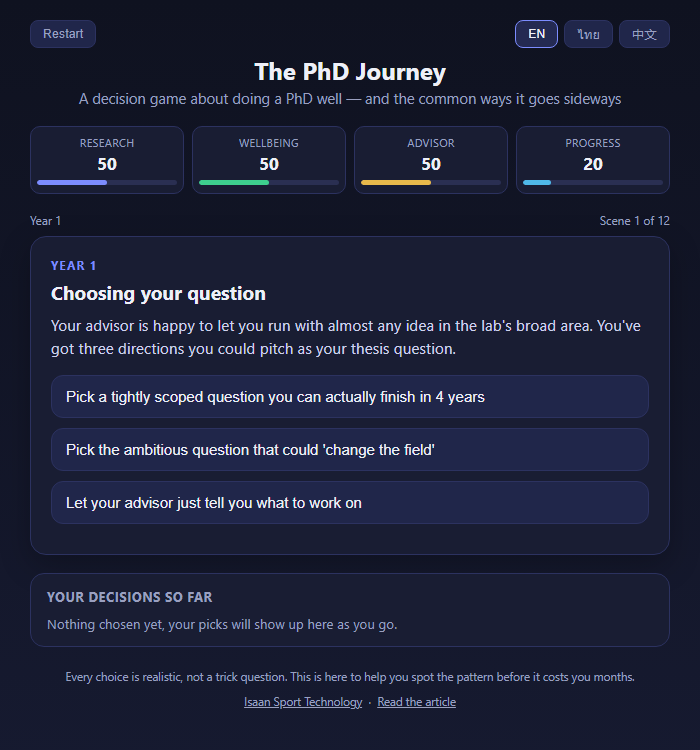
นักศึกษาปริญญาเอกมักเจอหลุมพรางระหว่างทาง และบ่อยครั้งเป็นหลุมเดียวกับที่รุ่นก่อนเคยตกไปแล้ว เกมเพื่อการศึกษาความยาว 15 นาทีนี้เปิดให้เล่นฟรี พาผู้เล่นเดินผ่านการเรียนปริญญาเอกทีละการตัดสินใจ ตั้งแต่การเลือกคำถามวิจัยในปีที่ 1 ไปจนถึงการสอบป้องกันวิทยานิพนธ์ในปีที่ 4 เป้าหมายคือให้เห็นปัญหาที่พบบ่อย ผลที่ตามมา เช่น ความล่าช้า และทางเลือกอื่นที่ทำได้ ซึ่งอาจช่วยให้อาจารย์ที่ปรึกษาไม่ต้องอธิบายซ้ำ และไม่ต้องตามแก้ปัญหามากเท่าเดิม
วิธีการทำงานของเกม
ผู้เล่นจะผ่านฉากต่าง ๆ ที่มาจากประสบการณ์จริงของการเรียนปริญญาเอก แต่ละฉากให้ตัดสินใจว่าจะรับมืออย่างไร แล้วเห็นผลของการเลือกนั้น พร้อมกับคะแนนสี่ด้านที่ขยับตามไป ได้แก่ งานวิจัย สุขภาวะ ความสัมพันธ์กับอาจารย์ที่ปรึกษา และความคืบหน้า รวมถึงจำนวนปีที่ใช้ไปกับการวิจัย ไม่มีเส้นทางที่ถูกต้องเพียงทางเดียว เพราะจุดประสงค์คือให้เรียนรู้ทั้งการตัดสินใจที่ดีและที่แย่ การเลือกทางที่แย่กว่าจึงไม่ใช่เรื่องผิด บางทางเลือกแลกการจบเร็วกับวิทยานิพนธ์ที่อ่อนกว่า หรือแลกความสัมพันธ์ที่ราบรื่นกับความคืบหน้าที่ช้าลง เมื่อจบเกมจะได้ค่าดัชนีสุขภาพของการเรียนปริญญาเอกเต็ม 100 ประมาณการเวลาที่ใช้จนจบ และสรุปบทเรียนสำคัญของรอบนั้นเนื้อหาที่ครอบคลุม
- การกำหนดขอบเขตคำถามวิจัย เลือกสิ่งที่ทำจบได้จริง แทนการไล่ตามแนวคิดที่จะพลิกวงการ
- การทบทวนวรรณกรรม จะเกิดอะไรขึ้นเมื่อข้ามขั้นตอนนี้ และการทำอย่างจริงจังช่วยคุณให้พ้นจากอะไรในภายหลัง
- ระเบียบวิธีวิจัยและการลงทะเบียนแผนล่วงหน้า การล็อกแผนการวิเคราะห์ก่อนเห็นข้อมูล
- การจัดการข้อมูล นิสัยที่ไม่หวือหวาอย่างการสำรองข้อมูล การควบคุมเวอร์ชัน และโค้ดที่ทำซ้ำได้ ซึ่งปกป้องงานหลายปีของคุณ
- การดูแลความสัมพันธ์กับอาจารย์ที่ปรึกษา การสื่อสาร ความคาดหวัง และการรับมือเมื่อโอกาสภายนอกดึงคุณออกนอกเส้นทาง
- งานประชุมวิชาการ ความโดดเดี่ยว และภาวะหมดไฟ การแยกให้ออกว่าปัญหาอยู่ที่ระบบสนับสนุน ไม่ใช่ความสามารถ
- ผลที่ทำซ้ำไม่ได้ ผลที่ยืนยันไม่ได้หมายความอย่างไรต่อไทม์ไลน์ของคุณ
- การเขียน การตีพิมพ์ และช่วงสุดท้าย การแปลงงานหลายปีให้เป็นวิทยานิพนธ์และการสอบป้องกัน
ตัวอย่างฉากในเกม
สองฉากจากทั้งหมดสิบสองฉาก เพื่อให้เห็นภาพก่อนเริ่มเล่นปีที่ 1 การเลือกคำถามวิจัย อาจารย์ที่ปรึกษายินดีให้คุณเลือกหัวข้อเกือบทุกอย่างในขอบเขตกว้าง ๆ ของแล็บ คุณมีสามทางที่เสนอเป็นคำถามวิทยานิพนธ์ได้
- เลือกคำถามที่ขอบเขตแคบและทำจบได้จริงภายใน 4 ปี
- เลือกคำถามที่ทะเยอทะยานซึ่งอาจพลิกวงการ
- ปล่อยให้อาจารย์ที่ปรึกษาเป็นคนบอกว่าให้ทำเรื่องอะไร
หากเลือกคำถามที่แคบ เกมจะอธิบายว่าทำไม คำถามที่แคบและตอบได้คือสิ่งที่วิทยานิพนธ์ที่ทำเสร็จสร้างขึ้นมาจากมัน คุณขยายการอภิปรายให้กว้างขึ้นทีหลังได้เสมอ แต่คุณย้อนคืนเวลาสามปีที่หมดไปกับคำถามที่กว้างเกินไปไม่ได้
ปีที่ 2 การออกแบบระเบียบวิธีวิจัย คุณกำลังจะเริ่มเก็บข้อมูล เพื่อนร่วมงานเสนอให้ลงทะเบียนสมมติฐานและแผนการวิเคราะห์ไว้ล่วงหน้าก่อนดูข้อมูลใด ๆ
- ลงทะเบียนสมมติฐานและแผนการวิเคราะห์ล่วงหน้า
- ข้ามไป เพราะแผนก็เปลี่ยนอยู่ดี
- เขียนแผนไว้ส่วนตัวแต่ไม่ลงทะเบียนอย่างเป็นทางการ
หากเลือกลงทะเบียนล่วงหน้า ผลจะเห็นในภายหลัง เพราะมันล็อกแผนไว้ก่อนที่ข้อมูลจะมีอิทธิพลต่อการตัดสินใจ เป็นงานเอกสารเพิ่มขึ้นในตอนนี้ และเป็นเกราะที่แข็งแรงที่สุดต่อข้อกล่าวหาเรื่องการปั้นค่า p ในภายหลัง
เหมาะกับใคร
นักศึกษาปริญญาเอกที่กำลังเรียนและอยากได้ความเห็นที่สองก่อนตัดสินใจ ผู้ที่กำลังคิดจะเรียนต่อและอยากเข้าใจว่าการเรียนปริญญาเอกเป็นอย่างไรในแต่ละวัน รวมถึงอาจารย์ที่ปรึกษาและพี่เลี้ยงที่ต้องการเปิดบทสนทนาเรื่องจุดที่มักพลาดกันบ่อย หรืออยากลดความผิดพลาดที่เลี่ยงได้ของนักศึกษา เกมใช้เวลาราว 15 นาที เล่นรวดเดียวจบหรือแบ่งเล่นหลายครั้งก็ได้ เพราะความคืบหน้าถูกบันทึกไว้ในเบราว์เซอร์ภาษา อังกฤษ จีน ไทย
เกมมีให้เล่นทั้งภาษาอังกฤษ ภาษาไทย และภาษาจีนตัวย่อ สลับภาษาได้ทุกจุดโดยไม่สูญเสียความคืบหน้างานวิจัยที่อยู่เบื้องหลังแต่ละฉาก
ฉากในเกมไม่ได้คิดขึ้นลอย ๆ แต่ละฉากตั้งอยู่บนผลการศึกษาที่เผยแพร่แล้ว และคะแนนทั้งสี่ด้านขยับไปในทิศทางเดียวกับที่งานวิจัยบอกไว้| ฉากในเกม | สิ่งที่งานวิจัยระบุ |
|---|---|
| สุขภาวะและความโดดเดี่ยว | ในนักศึกษาปริญญาเอก 1,265 คนของมหาวิทยาลัยขนาดใหญ่ในบาร์เซโลนา 40.6 เปอร์เซ็นต์มีคะแนนเกินจุดตัดของอาการวิตกกังวล และ 46.5 เปอร์เซ็นต์เกินจุดตัดของอาการซึมเศร้า1 |
| สุขภาวะ อีกชุดข้อมูลหนึ่ง | การศึกษานำร่องในนักศึกษาปริญญาเอก 352 คนของมหาวิทยาลัยปาเวีย พบความชุกในรอบ 12 เดือนที่ 18.5 เปอร์เซ็นต์สำหรับโรคทางอารมณ์ และ 25.0 เปอร์เซ็นต์สำหรับโรควิตกกังวล2 |
| การลงทะเบียนแผนล่วงหน้า | จากบทความวิจัยด้านวิทยาศาสตร์การกีฬา 2,006 ชิ้นที่ตีพิมพ์ในปี 2024 มี 201 ชิ้น หรือ 10.0 เปอร์เซ็นต์ ที่ลงทะเบียนแผนไว้ล่วงหน้า3 |
| ผลที่ทำซ้ำไม่ได้ | จากการทำซ้ำงานวิจัยจิตวิทยาที่ตีพิมพ์แล้ว 100 ชิ้น มีเพียง 36 เปอร์เซ็นต์ที่ได้ผลมีนัยสำคัญทางสถิติ เทียบกับ 97 เปอร์เซ็นต์ของงานต้นฉบับ และขนาดอิทธิพลของการทำซ้ำเหลือเพียงครึ่งเดียว4 |
คะแนนความสัมพันธ์กับอาจารย์ที่ปรึกษามีอยู่ด้วยเหตุผลเดียวกัน ในกลุ่มตัวอย่างที่บาร์เซโลนา การได้รับการดูแลจากพี่เลี้ยงเคลื่อนไปด้วยกันกับความพึงพอใจในชีวิต และผู้วิจัยชี้ว่านักศึกษาที่มีภาวะทางจิตเวชมีความเสี่ยงสูงกว่าที่จะล้มเหลวทางวิชาการและออกกลางคัน1 อาจารย์ที่ปรึกษาจึงไม่ใช่ของแถมในโมเดลนี้ แต่เป็นตัวแปรหนึ่ง
ฉากการลงทะเบียนแผนล่วงหน้ายังมีเงื่อนไขที่เกมบอกในบรรทัดเดียวไม่ได้ งานวิจัยด้านวิทยาศาสตร์การกีฬาที่ลงทะเบียนล่วงหน้ารายงานว่าผลสนับสนุนสมมติฐาน 45 เปอร์เซ็นต์ เทียบกับ 56 เปอร์เซ็นต์ของงานที่ไม่ได้ลงทะเบียน ซึ่งต่างกันจริงแต่ต่างกันไม่มาก และในบรรดางานที่ลงทะเบียนและมีสมมติฐาน 69.4 เปอร์เซ็นต์ไม่มีสมมติฐานอยู่ในการลงทะเบียนเดิม หรือรายงานสมมติฐานที่ต่างออกไป3 การลงทะเบียนแผนจึงช่วยได้ก็ต่อเมื่อคุณทำตามแผนนั้นจริง
คำถามที่พบบ่อย
เกมนี้ใช้เวลาเล่นนานแค่ไหน
ราว 15 นาทีสำหรับการเล่นครบสี่ปีหนึ่งรอบ เกมบันทึกความคืบหน้าไว้ในเบราว์เซอร์ คุณจึงหยุดหลังจบปีที่ 2 แล้วกลับมาเล่นรอบเดิมต่อได้ ผู้เล่นส่วนใหญ่เล่นมากกว่าหนึ่งรอบ เพราะส่วนที่น่าสนใจคือการได้เห็นว่าชุดการตัดสินใจที่ต่างออกไปส่งผลต่อคะแนนทั้งสี่ด้านอย่างไร และรอบหลัง ๆ จะเล่นได้เร็วขึ้น
เกมนี้เจาะจงเฉพาะสาขาวิจัยใดหรือไม่
ไม่เจาะจง ฉากต่าง ๆ เขียนขึ้นรอบการตัดสินใจที่พบได้ในหลักสูตรปริญญาเอกเกือบทุกสาขา ทั้งการกำหนดขอบเขตคำถาม การทบทวนวรรณกรรม แผนการวิเคราะห์ การจัดการข้อมูล ความสัมพันธ์กับอาจารย์ที่ปรึกษา ความโดดเดี่ยว ผลที่ทำซ้ำไม่ได้ และการเขียนวิทยานิพนธ์ หลักฐานเบื้องหลังฉากการลงทะเบียนแผนมาจากวิทยาศาสตร์การกีฬาและจิตวิทยา ซึ่งมีตัวเลขชัดที่สุด แต่การตัดสินใจนั้นเหมือนกันในทุกสาขาที่ทำวิจัยเชิงประจักษ์
เนื้อหาในเกมอ้างอิงงานวิจัยหรือไม่
อ้างอิง คะแนนทั้งสี่ด้านและฉากต่าง ๆ อิงผลการศึกษาที่เผยแพร่แล้ว ซึ่งระบุไว้ในรายการอ้างอิงด้านล่าง ตัวเลขด้านสุขภาพจิตของนักศึกษาปริญญาเอกมาจากการสำรวจนักศึกษา 1,265 คนและ 352 คน ฉากการลงทะเบียนแผนมาจากการวิเคราะห์บทความด้านวิทยาศาสตร์การกีฬา 2,006 ชิ้น และฉากการทำซ้ำมาจากโครงการทำซ้ำงานวิจัย 100 ชิ้นในสาขาจิตวิทยา1,2,3,4
ความคืบหน้าจะถูกบันทึกไว้หรือไม่
บันทึกไว้ในเบราว์เซอร์ของคุณ การปิดแท็บจึงไม่ทำให้รอบที่เล่นอยู่หายไป และการสลับภาษาก็ยังเก็บความคืบหน้าไว้เช่นกัน หากล้างข้อมูลเบราว์เซอร์ เปิดเกมในหน้าต่างส่วนตัว หรือเปิดบนเครื่องอื่น จะเริ่มรอบใหม่ จึงควรเล่นให้จบบนเครื่องเดิมที่เริ่มไว้หากต้องการเก็บรอบเดิมไว้
อาจารย์ที่ปรึกษาใช้เกมนี้กับกลุ่มนักศึกษาได้หรือไม่
ใช้ได้ และเป็นหนึ่งในเหตุผลที่ทำเกมนี้ขึ้นมา ลองฉายบนจอกับนักศึกษารุ่นใหม่ ให้ทั้งห้องโหวตแต่ละการตัดสินใจ แล้วอ่านผลที่ตามมาไปด้วยกัน การถกเถียงว่าควรเลือกทางไหนมักมีประโยชน์กว่าคะแนนตอนจบ และช่วยให้เรื่องที่พูดยาก ทั้งการดูแลของอาจารย์และภาวะหมดไฟ ถูกยกขึ้นมาคุยโดยไม่ต้องชี้ตัวใคร
เล่นฟรีและต้องสมัครสมาชิกหรือไม่
เล่นฟรีและไม่ต้องสมัคร ไม่ต้องใช้อีเมล ไม่ต้องเข้าสู่ระบบ เพียงเปิดหน้าเว็บแล้วเล่นได้เลย ไม่มีการอัปโหลดข้อมูล เพราะรอบที่เล่นถูกเก็บไว้ในเบราว์เซอร์ของคุณเอง และไม่มีอะไรต้องติดตั้ง เผยแพร่ไว้ให้นักศึกษาและอาจารย์ใช้ได้ตามต้องการ ทั้งภาษาอังกฤษ ไทย และจีนตัวย่อ
หากคุณทำวิจัยด้านวิทยาศาสตร์การกีฬา
ปัญหาด้านการวัดที่เกมพูดถึงผ่าน ๆ มีอธิบายไว้อย่างละเอียดพร้อมตัวเลขในหน้าอื่นของเว็บไซต์นี้- เกณฑ์มาตรฐานการกระโดดไกลแบบยืน และแบบบันทึกผล สำหรับดูว่าค่าที่เปลี่ยนไปเป็นของจริงหรือเป็นความคลาดเคลื่อนของการวัด
- คู่มือวัดไขมันใต้ผิวหนัง พร้อมค่าความคลาดเคลื่อนที่เผยแพร่ไว้ของสูตรคำนวณเปอร์เซ็นต์ไขมัน
- วิเคราะห์วิดีโอฟรีด้วย Kinovea สำหรับเก็บข้อมูลจลนศาสตร์โดยไม่ต้องใช้งบห้องปฏิบัติการ
เล่นเลย
เอกสารอ้างอิง
- Krieger V, Canete-Masse C, Amador-Campos JA, et al. Mental health among Spanish doctoral students: relationship between anxiety, depression, life satisfaction, and mentoring. European Journal of Investigation in Health, Psychology and Education. 2025;15(8):164. doi:10.3390/ejihpe15080164
- Vecchio R, Mosconi G, Gandola M, et al. Investigating PhD students wellbeing and mental health: towards evidence-led and innovative solutions. Frontiers in Psychology. 2026. doi:10.3389/fpsyg.2026.1900506
- Bennett H, Blake H, d Unienville N, Murray J, Fox J. The uptake of preregistration, and its impact on the proportion of supported hypotheses, in sports science. Sports Medicine. 2026. doi:10.1007/s40279-026-02451-2
- Open Science Collaboration. Estimating the reproducibility of psychological science. Science. 2015;349(6251):aac4716. doi:10.1126/science.aac4716
ดร.วรรณพร สำราญพัฒน์ เบรดี เป็นนักกายภาพบำบัดที่จบปริญญาเอก ไม่ใช่แพทย์ และเป็นอาจารย์ประจำภาควิชาวิทยาศาสตร์สุขภาพและการกีฬา คณะศึกษาศาสตร์ มหาวิทยาลัยมหาสารคาม งานวิจัยหลักคือเรื่องอาการปวดข้อสะบ้า (patellofemoral pain, PFP) จบปริญญาเอกสาขาวิทยาศาสตร์การออกกำลังกายและการกีฬาจากมหาวิทยาลัยมหาสารคาม ปริญญาโทสาขากายภาพบำบัดจากมหาวิทยาลัยขอนแก่น และปริญญาตรีสาขากายภาพบำบัดจากมหาวิทยาลัยนเรศวร และมีผลงานวิจัยตีพิมพ์ด้านการฟื้นฟูการบาดเจ็บจากกีฬา ชีวกลศาสตร์การกีฬา และการออกแบบโปรแกรมฝึกร่างกายด้วย เป็นผู้ร่วมก่อตั้ง Isaan Sport Technology และเขียนบทความวิทยาศาสตร์การกีฬาของร้าน ซึ่งใช้ตัวเลขจากงานวิจัยในวารสารและจากการทดสอบอุปกรณ์ที่ร้านจำหน่าย